What's happening.
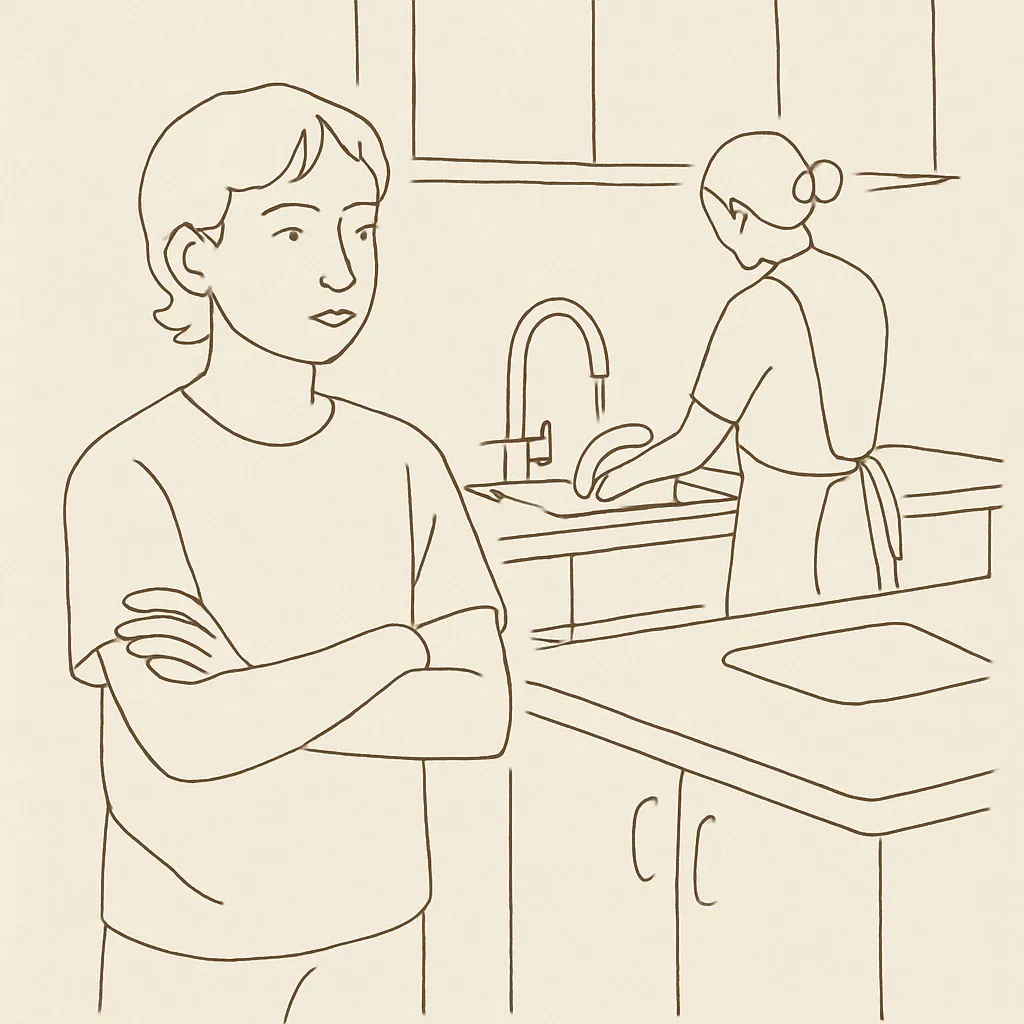
Your 12-year-old refuses to put down the iPad for dinner. You ask again. They cross their arms: “You're not the boss of me.” You feel the back of your neck heat.
What we usually say — and why it backfires.
I am EXACTLY the boss of you. Put it down right now.
NO.
Then no screens for a week.
I HATE this house.
- Insisting on being “the boss” engages the title fight on the teen's terms — and you'll keep having that exact fight for the next six years.
- Escalating to “no screens for a week” in 4 seconds is sentence inflation. By Wednesday you'll soften it; the teen will note that consequences are negotiable when you're angry.
- “I HATE this house” closes the conversation with both of you in worse positions than when it started over a 90-second iPad transition.
What works — and why.
You're right, I'm not your boss. I'm your parent, which is different. Dinner is now. iPad off, please.
Why is now THE time?
Because we agreed dinner is together, and the food is hot. You can come back to whatever you're doing after.
(grumbles, comes to the table)
- “I'm not your boss, I'm your parent — which is different” concedes the framing AND reasserts the relationship in one sentence. The teen has nowhere to put their fight.
- Stating the rule (“dinner is now”) as fact, not request, removes the “you're bossing me” energy. It's just what's happening.
- “You can come back to whatever you're doing after” offers a path forward, which is what the teen actually needed to put the iPad down without losing.
Why this script works on a teen brain.
Middle-school defiance is biologically scheduled, not chosen. The brain is undergoing its largest re-wiring since age 3, and one of the central tasks is separating identity from the parent. "You're not the boss of me" isn't an accurate description of the household; it's a developmental flag that says "I'm working on becoming a separate person, and I need you to react in a way that doesn't crush that."
When parents insist on the title ("I am EXACTLY the boss"), they engage the very fight the teen is trying to have, on the teen's terms — and they lose, because no parent can win a six-year war of attrition with a developing identity. The parents who win the long game step out of the title fight entirely. "I'm your parent — which is different" doesn't argue. It acknowledges the teen's framing and reasserts the relationship in a single sentence.
The other half of the move is stating the rule as fact rather than command. "Dinner is now" is the kind of sentence the universe says — it's not a demand, it's a description. Teens respond to descriptions of how things are far better than they respond to commands about how things must be. Same outcome, completely different relationship texture.
Same dynamic, different surface.
Your 13-year-old refuses to wear a coat to school. You suggest one. They escalate immediately: "You can't tell me what to wear. I'm not five." You bite back the obvious response.
What usually happens.
You will freeze and then complain you're cold. I'm the parent, you wear the coat.
I won't be cold. STOP.
Wear it or you don't go to school.
(slams door, goes without coat anyway)
- "You will freeze" tries to win the prediction war — but losing the prediction war doesn't get them to wear the coat; it just confirms you think they're stupid.
- Escalating to "or you don't go to school" is sentence inflation on a clothing decision. You'll back off by 7:30am and they'll note that consequences are negotiable.
- The slam-door ending is the predictable result and the worst possible morning send-off.
What works better.
You're right, I can't tell you what to wear. Heads up: it's 35 degrees and windy. Coat's by the door if you want it.
I don't need it.
Okay. (drops it.)
(2pm: teen texts asking parent to bring a sweatshirt.)
On my way.
- Conceding the autonomy claim in seven words instantly disarms the fight. The teen has nothing to push back against.
- Sharing the data ("35 and windy") respects their judgment by giving them the information you'd use yourself — and lets them own the consequence.
- Bringing the sweatshirt at 2pm without comment is the move that keeps the door open. "I told you so" is the temptation; not saying it is the parenting.
Key phrases to reach for in the moment.
- You're right, I'm not your boss.
- I'm your parent — which is different.
- [The rule] is now.
- You can come back to whatever you're doing after.
When to use each one.
-
You're right, I'm not your boss.
Use as the first move on every defiance line. Concedes the framing without giving up the rule.
-
I'm your parent — which is different.
Use immediately after. Reasserts the relationship without making it a power claim.
-
[The rule] is now. Heads up: [data they need].
Use to state rules as facts. The data version respects autonomy AND informs the choice.
-
(Then bite back the I-told-you-so when they come back.)
Use as a private discipline. Never said out loud; always remembered by the teen.