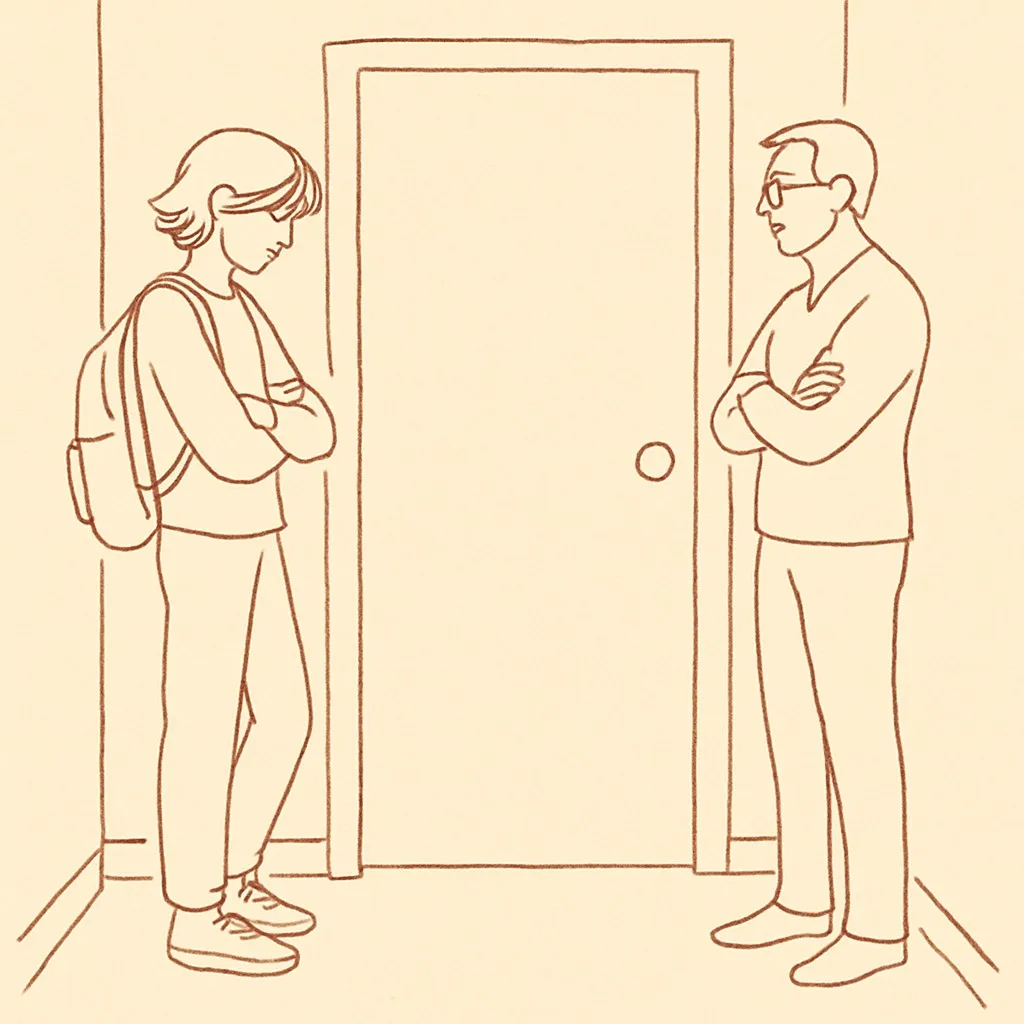
What's happening.
Mid-fight, your 15-year-old fires: “Why did you even have me?” It's meant to wound. It also lands as a real question to a teen brain that's been doom-scrolling existential content for hours.
What we usually say — and why it backfires.
Don't say things like that. That's an awful thing to say to your mother.
Well, you act like you regret it.
You have no idea what I went through to have you.
Then why are we doing this?
- Moralizing the question (“awful thing to say”) treats the symptom of pain as a behavior to correct. They don't apologize; they retreat.
- “What I went through to have you” weaponizes the parent's history against the teen's question. It does not register as love.
- “Then why are we doing this?” is the teen telling you they want the same thing you do — connection — and you've both forgotten how to ask for it.
What works — and why.
(takes a breath) Okay. Stop. Real answer, even though we're mid-fight. I had you because I wanted you. I still want you. Fighting doesn't change that — it just means we both have a feeling we don't know what to do with yet.
...
Let's pause the rest of this for tonight. You and me are not the problem. The problem is the [thing we were fighting about]. We'll come back to it tomorrow.
Okay.
- Answering the literal question (“I had you because I wanted you. I still want you.”) is the single sentence the teen most needs to hear. Don't make them earn it.
- Naming what fighting IS (“a feeling we don't know what to do with yet”) externalizes the conflict — “you vs me” becomes “us vs the feeling.”
- Pausing rather than finishing the fight gives both nervous systems the time they need. You'll fight better tomorrow. Or, often, find out it didn't need a fight at all.
Key phrases to reach for in the moment.
- (Long breath. Real answer.)
- I had you because I wanted you. I still want you.
- You and me are not the problem.
- Let's pause the rest of this for tonight. We'll come back to it tomorrow.
Call or text 988 (Suicide & Crisis Lifeline, 24/7) · Text HOME to 741741 (Crisis Text Line) · Find a child psychiatrist at aacap.org · For immediate danger, call 911.