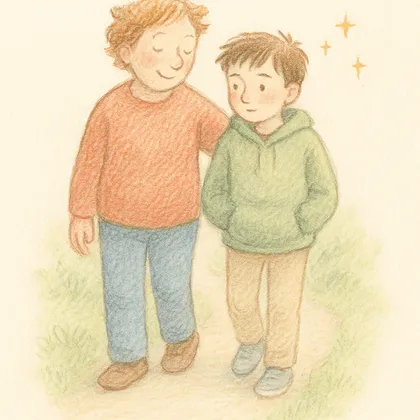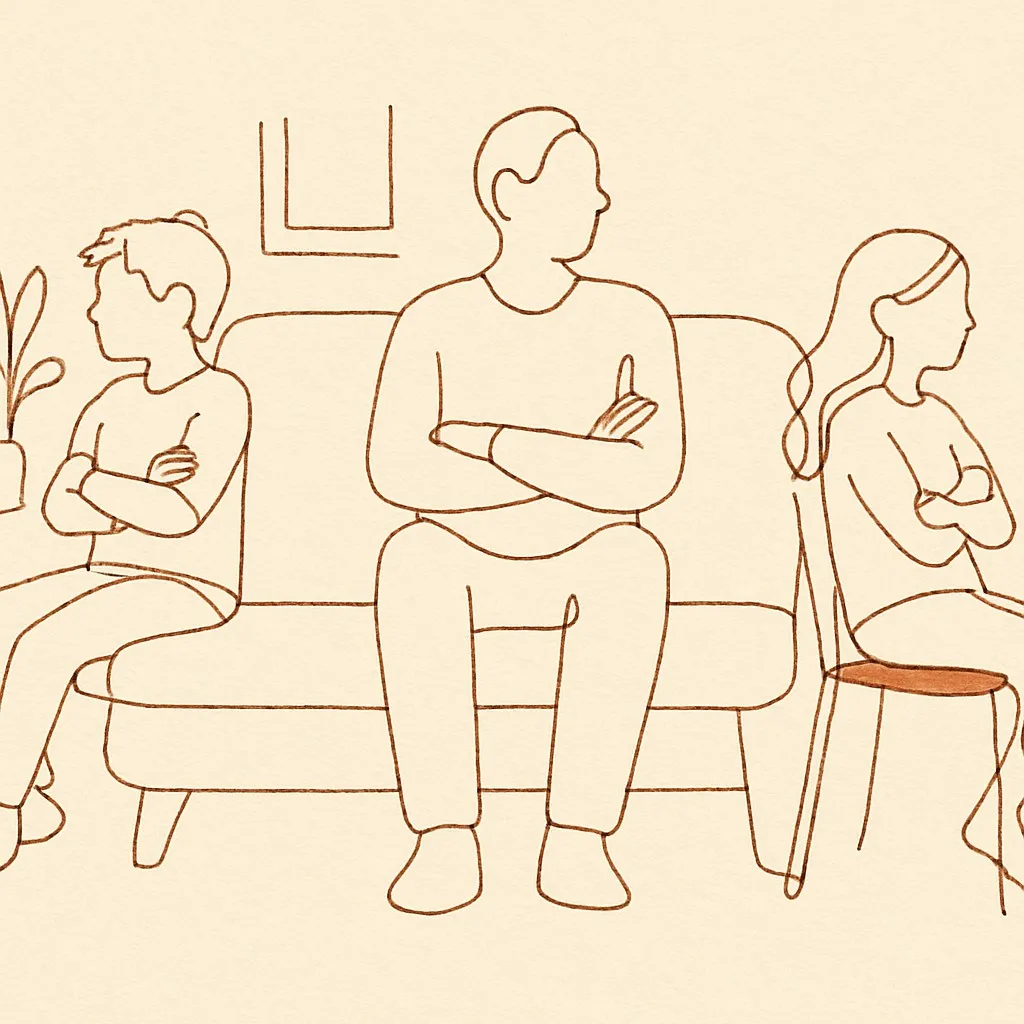
What's happening.
Your 14-year-old and 10-year-old were arguing over the TV remote. You told the 14-year-old to let the 10-year-old have it. The 14-year-old explodes: “Why do you always take their side?!”
What we usually say — and why it backfires.
I don't always take their side. You're being unfair.
You literally just took their side.
Because they're little! You're the older one!
So I have to lose every fight forever because they were born after me?
- “I don't always take their side” is technically true and emotionally beside the point. The teen feels it; that's the data point that matters.
- “Because they're little” is the formula that creates the older-sibling resentment that lasts into adulthood.
- The teen's last line (“lose every fight forever”) is actually quite accurate to their experience. Worth sitting with rather than dismissing.
What works — and why.
Hold on. You're right that I went to default older-kid mode. Let me redo this without picking a side first.
...
What were the actual terms before this started? Whose show was on, whose turn was it?
I had it first. I was watching my show. They came in and just demanded it.
Okay, that's important. (to the 10-year-old) Sweetie, your sibling had the remote first — you can have it after their show. We're going to take turns, not just hand it over.
- Naming the bias out loud (“I went to default older-kid mode”) instantly defuses the older sibling's accusation — you took THEIR side by being honest.
- Asking for the timeline before judging is the parenting move that prevents 90% of sibling resentment. It signals: fairness based on facts, not age.
- Re-deciding with the younger sibling present teaches both kids the rule applies in both directions. That's the actual goal.
Why this script works on a teen brain.
The "be nice to your younger sibling, you're older" formula is the single most-cited source of adult sibling resentment in long-form family therapy notes. The older child learns, repeatedly, that fairness operates on a sliding scale that disadvantages them by default — and the felt unfairness compounds. By the time the older child is in their twenties, the resentment shows up not as a complaint about a remote control but as a steady distance from a parent who, in the older child's memory, did not see them clearly.
The younger sibling is also paying a cost most parents don't track: they learn that crying or escalating gets them the resource, which generalizes into a habit of emotional escalation that follows them into adulthood. Neither child wins on the long timeline. The only durable rule is procedural — whose turn is it, who had it first, what's the cycle — and both kids feel safer under it once it's established, even though one of them protests in the moment.
The parent's move to name the bias out loud ("I went to default older-kid mode") is doing something specific: it tells both kids you have a fairness model that you sometimes fail at, rather than a fairness model that one of them needs to suffer under. Adolescents are unusually attuned to this distinction. They will forgive a parent who acknowledges the bias far more readily than they will accept the bias itself.
Same dynamic, different surface.
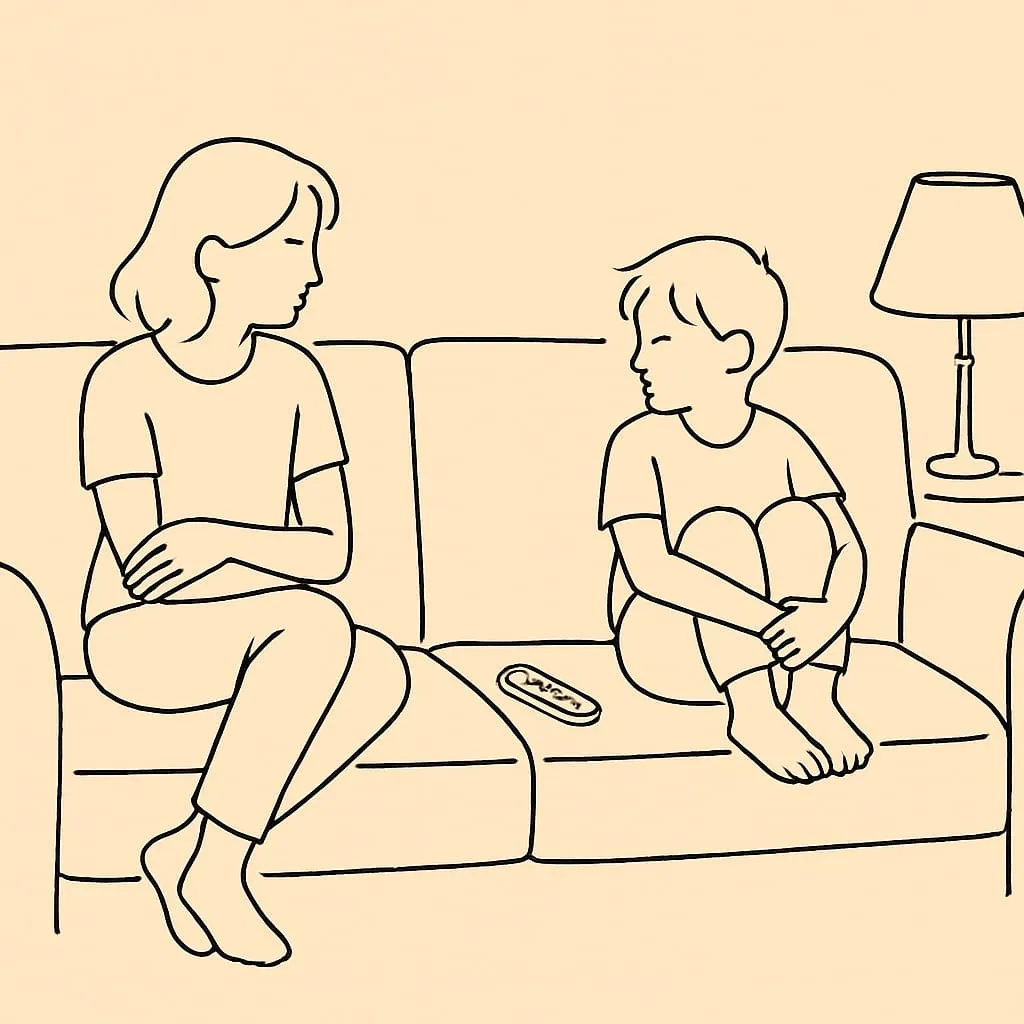
Your 13-year-old and 16-year-old are arguing in the kitchen about chores. The 13-year-old says the 16-year-old hasn't done dishes in a week. The 16-year-old says they did the trash twice. You don't actually know who's right. You took the 13-year-old's side instinctively because the 16-year-old has been moodier lately.
What usually happens.
Just do the dishes. You're being difficult.
Oh great. You always assume it's me.
Maybe because it usually is.
Cool. I'm done with this house.
- "You're being difficult" is a character-attack disguised as observation. The teen will defend the character before doing the chore.
- "Maybe because it usually is" cites a pattern as justification for not checking the specific case. The teen learns: with my parent, my reputation outweighs my evidence.
- "I'm done with this house" is the 16-year-old logging the unfairness internally — and it will be quoted back at you years later in a fight about something else.
What works better.
Hang on. I think I just defaulted to the moody-teen-is-wrong story. Talk me through the actual chore split this week — who did what.
I did trash Tuesday and Friday. Dishes were supposed to be Eli but they kept saying tomorrow.
Okay. Got it. Eli, dishes tonight — you owe them. (to the 16-year-old) Sorry for jumping. I should have asked first.
(quiet) Thanks.
- Naming your own bias ("moody-teen-is-wrong story") models the meta-honesty you want them to develop. Hearing a parent name a bias is rare and lands.
- Asking for the actual split before judging is the procedural-fairness move. Both kids will accept a chore assignment that came from a real audit, even an inconvenient one.
- The quiet "thanks" from the older teen is the data — they noticed, they registered, the bank of trust just went up a notch.
Key phrases to reach for in the moment.
- Hold on. You're right.
- I went to default older-kid mode. Let me redo this.
- What were the actual terms before this started?
- We're going to take turns, not just hand it over.
When to use each one.
-
Hold on. I think I just defaulted to [bias].
Use the moment you catch yourself in the bias. Naming it out loud is the apology and the correction in one move.
-
Talk me through the actual [thing] — who did what.
Use to gather facts before judging. Procedural fairness is the only fairness that holds up over sibling years.
-
Sorry for jumping. I should have asked first.
Use as the explicit apology to the kid you wronged. Don't make them angle for it; offer it.
-
We're going to take turns, not just hand it over.
Use to set the durable rule. Vague fairness collapses; procedural fairness holds.