What's happening.
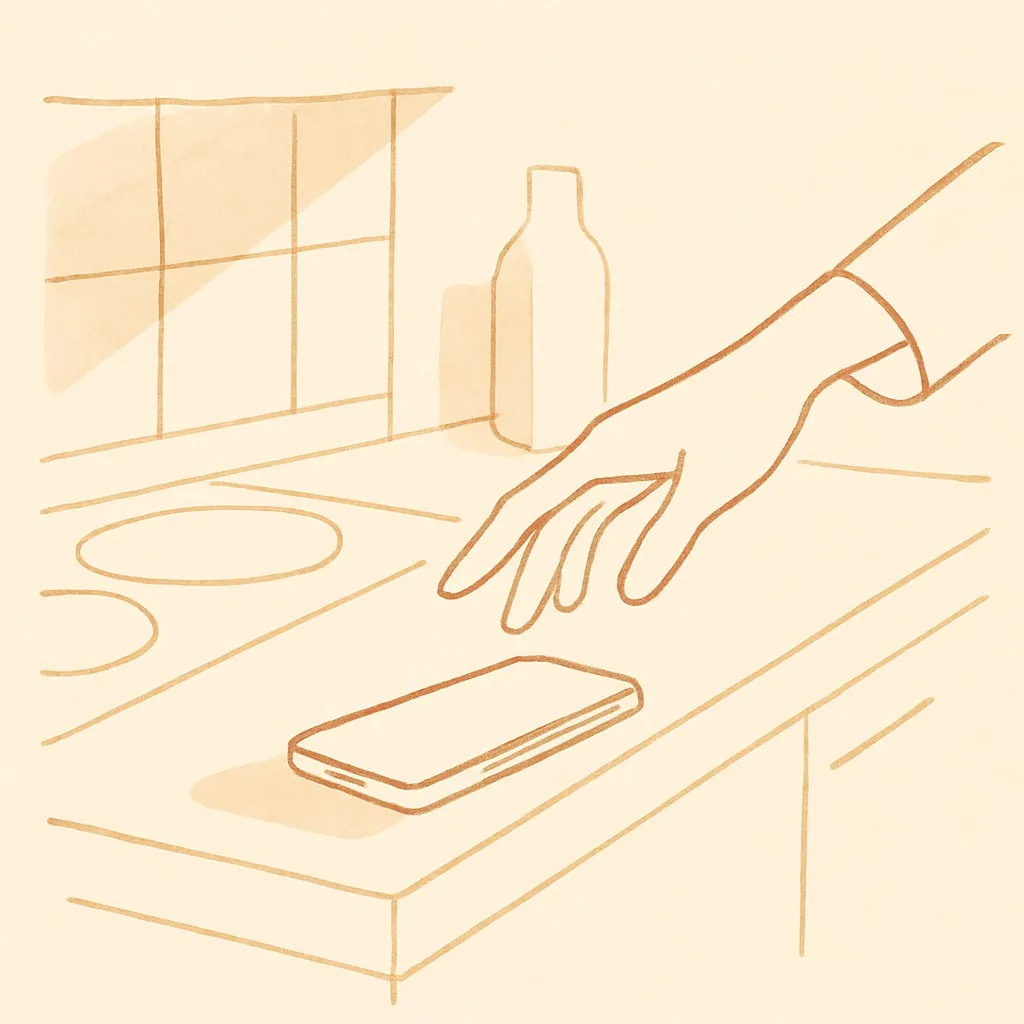
You picked up your teen's phone off the kitchen counter to plug it in. They walked in, saw you holding it, and detonated: “I told you not to TOUCH my phone.” You weren't snooping, but you can tell that doesn't matter right now.
What we usually say — and why it backfires.
Oh please. I was charging it for you.
Sure. Convenient story.
If you have nothing to hide, why does it matter?
Because privacy is a basic right and you don't respect mine.
- “Oh please” minimizes a real boundary violation (from their POV) before you've acknowledged it.
- “If you have nothing to hide” is the single worst sentence in any privacy conversation — it confirms the surveillance instinct without you realizing.
- You've now lost the argument AND given them a perfect line they'll use the next time you raise a real concern about something on the phone.
What works — and why.
You're right, I should have asked. I was going to plug it in, but the right move was to text you or wait. I'm sorry.
It just feels like you don't trust me.
I do trust you. Picking up a phone to charge it is a separate thing from snooping — but the rule should be the same either way: I don't touch your phone without asking. Going forward I won't.
Thanks.
- Owning the slip (“I should have asked”) without making excuses ends the fight immediately. The teen no longer has to defend the boundary.
- Distinguishing motive (charging vs snooping) AND committing to the same rule for both is mature parenting — it treats them like the adult they're becoming.
- The 30-second apology saves you weeks of phone-paranoia. Cheap trade.
Why this script works on a teen brain.
For the modern teen, the phone is not an object — it's a portable interior. Group chats with their closest friendships, journal-grade notes, the photo roll that documents their actual self-image, the search history that contains every embarrassing question they've quietly asked: it's all in there. When a parent picks the phone up, the teen's brain doesn't process "my parent is being helpful with charging"; it processes "my interior life is being handled by someone who didn't ask."
The parent's instinct to defend ("I was just charging it") is correct about intent and wrong about impact — and adolescents, biologically, weigh impact much more heavily than intent. The faster the parent concedes the impact ("I should have asked"), the faster the trust math resets. Stubborn defenses turn a 30-second misstep into a months-long phone-paranoia episode. The cost-benefit is brutal.
There's a long-game version of this too. Teens whose phones are respected as private space report disclosing actual problems (drug exposures, sexual coercion, peer crises) to their parents at significantly higher rates than teens whose phones are surveilled. The thing you fear discovering on the phone is exactly the thing you discover by NOT surveilling it. This is among the most counterintuitive — and most replicable — findings in modern parent-teen research.
Same dynamic, different surface.

You walk by your 15-year-old's open bedroom door. Their phone is on the bed, screen lit up with a string of notifications. You glance instinctively as you pass. They look up. "Mom. Why are you reading my notifications?" You weren't reading — but you were looking. They're not wrong.
What usually happens.
I wasn't reading them. They're on your screen — what am I supposed to do, close my eyes?
You stopped walking when you saw them.
I did not.
I saw you. Forget it. I'm closing my door from now on.
- "What am I supposed to do, close my eyes" is technically reasonable and tactically fatal — you skipped past the fact that you did, briefly, slow down to look.
- Denying the small specific thing they observed (you stopped walking) makes you look untrustworthy on the bigger thing.
- Their "I'm closing my door from now on" is a small downstream cost. The bigger one is the next thing they don't tell you because the model is now "my parent reads what they can."
What works better.
You're right. I slowed down for a second. I was being nosy without meaning to be. Sorry — I'll keep walking next time.
It's fine.
It's not, actually. It's the same as picking it up. Same rule applies. I should not be reading what's on your screen, even passing by.
...thanks for saying that.
- Conceding the specific micro-action ("I slowed down for a second") is what teens find rare and credible. They notice the small honesty before any apology lands.
- Pushing back on their own "it's fine" ("it's not, actually") signals you take the principle more seriously than they do — which is exactly the trust position you want.
- Extending the rule to passing-by sightings, not just picking up, treats the principle as the principle. Adolescents respect consistency more than convenience.
Key phrases to reach for in the moment.
- You're right, I should have asked.
- The right move was to text you or wait.
- I won't touch your phone without asking, going forward.
- (Then actually don't.)
When to use each one.
-
You're right, I should have asked.
Use as the first response to any phone-touched accusation. Skip the defense even when the defense is technically true.
-
Picking it up to charge it is the same as picking it up to snoop — same rule applies.
Use to extend the principle. Adolescents respect the principle more than the convenience exception.
-
I won't touch your phone without asking, going forward.
Use to commit. Only say it if you'll mean it; teens track this.
-
(Then actually don't.)
The unspoken script. Your future behavior is the apology. Verbal apologies without behavioral follow-through expire in 48 hours.