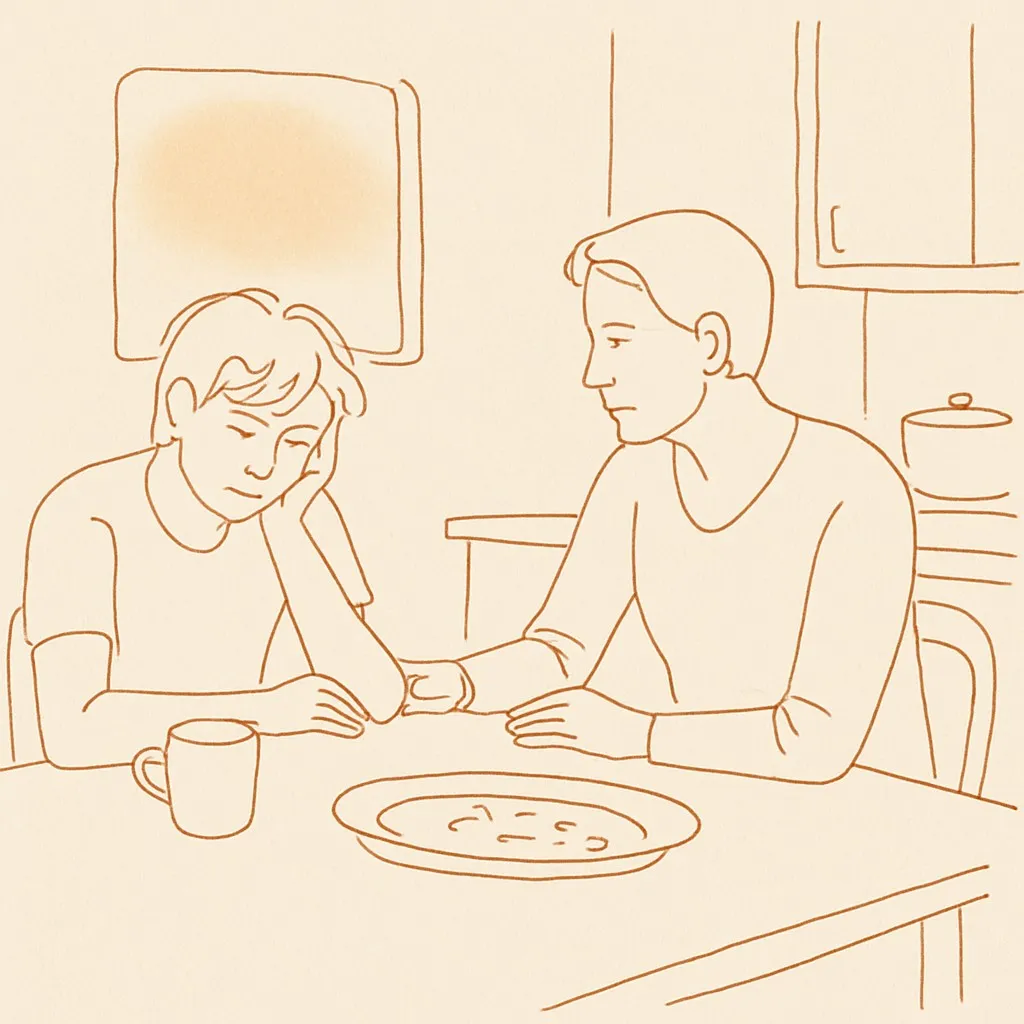
What's happening.
After family dinner. Your 15-year-old, quietly: “Mom. What you said about [neighbor / coworker / community] tonight was kind of racist. I just want to say.” You set down the glass.
What we usually say — and why it backfires.
I am NOT racist. That's a horrible thing to call me.
I didn't call YOU racist. I said the COMMENT was.
Same thing. I don't know where you're getting this from.
(catalogs that mom defends her own racism more than she examines it)
- “I am NOT racist” conflates the person with the comment — and that conflation is exactly what prevents adults from examining their own racism.
- “I don't know where you're getting this from” attacks the teen's frame instead of the content.
- Long-term: teens whose parents refused to examine racism either inherit the racism or grow up to deeply distance themselves from the parents.
What works — and why.
(pause) Tell me what specifically. I want to think about it.
When you said [the comment about the neighborhood / coworker / etc.], it sounded like you were generalizing about a whole group based on one experience.
...you're right. I did do that. I'm going to sit with that. Thank you for telling me. It takes guts to call me on something like that. I'd rather know than not know.
- “Tell me what specifically. I want to think about it” is the only response that allows actual examination.
- “You're right. I did do that. I'm going to sit with that.” owns the comment without an immediate fix or defense.
- “It takes guts to call me on something like that. I'd rather know than not know.” teaches the teen that holding loved adults accountable is good — they'll use this for the rest of their lives.
Key phrases to reach for in the moment.
- (Pause.) Tell me what specifically. I want to think about it.
- You're right. I did do that. I'm going to sit with that.
- Thank you for telling me. It takes guts to call me on something like that.
- I'd rather know than not know.