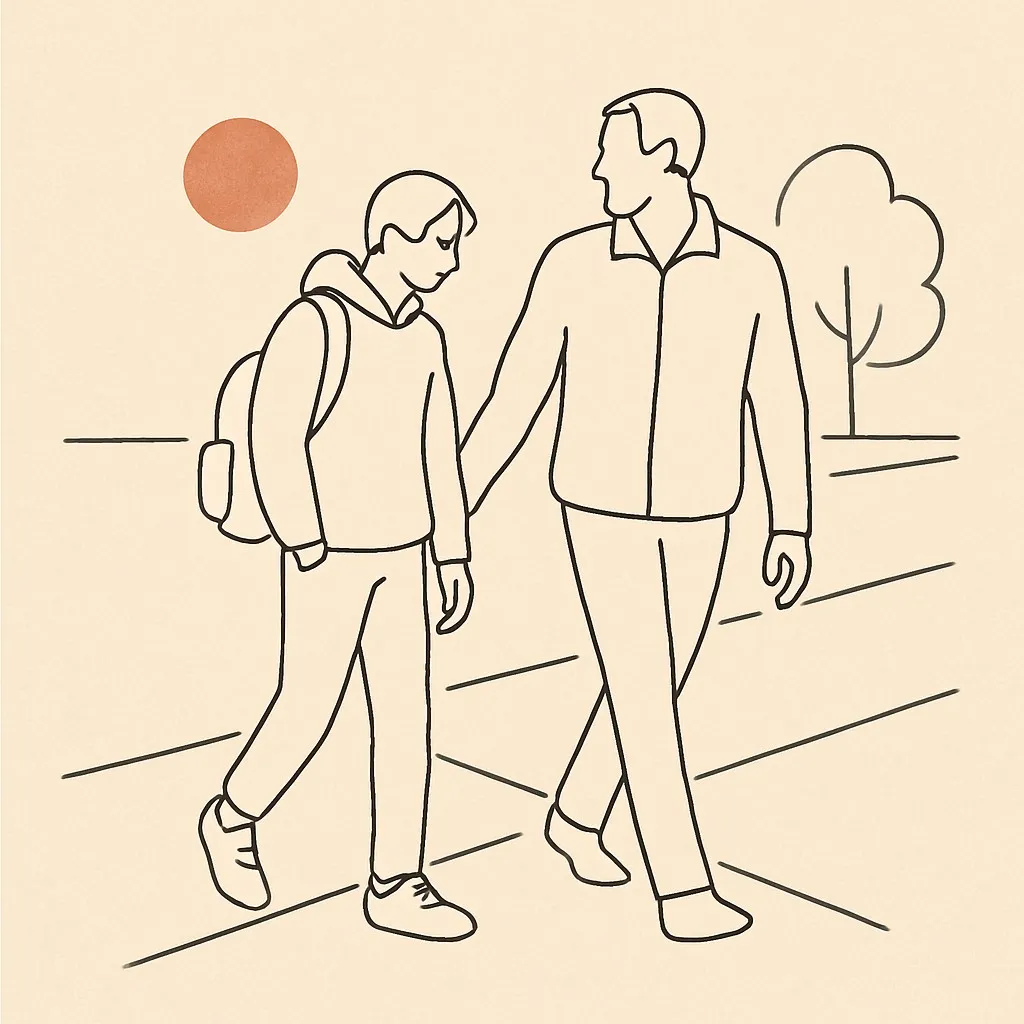
What's happening.
After school. Your 13-year-old: “My English teacher hates me. She picks on me in front of the whole class.” You hold the urge to defend the teacher and the urge to email her.
What we usually say — and why it backfires.
She doesn't hate you. She's just doing her job.
You don't even know her.
I know teachers don't hate students.
(stops telling you about school)
- “She doesn't hate you” asserts your model of teachers over their lived experience in the room. They'll defend their position harder.
- “I know teachers don't hate students” is generally true and specifically irrelevant. There are exceptions, and the teen may have found one.
- Either way, you've dismissed the feeling before you investigated the events. You'll find out about the next school problem from a teacher's email.
What works — and why.
Tell me what happens that makes it feel that way. What's a recent moment?
Yesterday she called on me twice when my hand wasn't up and the second time was during the part I didn't read. The whole class laughed.
Ugh. That would feel terrible. Does she do that to other kids too?
Sometimes. But it feels like more with me.
Okay. Two things we can do — one, you can keep a quiet tally for a week to see if the 'more with me' is the pattern or just what stands out. Two, if it IS a pattern after a week, I can ask for a meeting — but I want to bring evidence, not just feeling. Sound fair?
- “Tell me what happens that makes it feel that way” is the open question that surfaces real events instead of fighting the headline.
- The “quiet tally for a week” teaches the teen the parent move — gather evidence before acting on a strong feeling.
- Offering to bring evidence to the school (not just complaints) signals you take this seriously without skipping the work that makes the complaint land.
Key phrases to reach for in the moment.
- Tell me what happens that makes it feel that way. What's a recent moment?
- Does she do that to other kids too?
- Quiet tally for a week — pattern or just standing out?
- If it IS a pattern, I want to bring evidence, not just feeling.