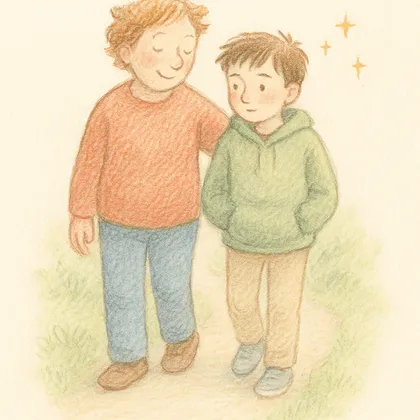
What's happening.
Your 14-year-old: “Maya hasn't responded to a text in 11 days. Yesterday she walked past me at lunch without saying anything. I don't know what I did.”
What we usually say — and why it backfires.
Some friendships just end. You'll make new ones.
You don't get how big this is.
Honestly her loss.
(forced positivity from parent registers as not-listening)
- “You'll make new ones” skips past the present grief to a future that doesn't help right now.
- “Honestly her loss” is the parent attacking the absent friend to comfort the present teen — and the teen doesn't want that. They still love their friend.
- Both responses convey: I want this conversation to end. Got the conversation to end.
What works — and why.
Eleven days is a long time. That's not a misunderstanding, that's deliberate, and that's a real loss. I'm so sorry.
I keep going through every conversation trying to figure out what I did.
Yeah. The not-knowing is somehow worse than knowing. Couple of options — one, you text her one clear thing: 'Hey, I notice we've drifted, I don't know if I did something. If you want to tell me, I'd want to hear. If not I understand.' That's enough — clear, no drama, gives her a door. Two, you don't, and accept the friendship may be ending and grieve it. Either is okay; what's NOT okay is staying in the second-guessing forever.
...the first one. I want to at least try.
- “That's not a misunderstanding, that's deliberate, and that's a real loss” names what the teen knows but couldn't say.
- “The not-knowing is somehow worse than knowing” is the truth about ghosting, said out loud.
- Giving them a written script for the clear-final-text is the meta-skill — and it works for friend breakups, romantic breakups, work conflicts, the rest of their life.
Key phrases to reach for in the moment.
- That's not a misunderstanding, that's deliberate, and that's a real loss.
- The not-knowing is somehow worse than knowing.
- [Script: 'I notice we've drifted, if you want to tell me I'd want to hear, if not I understand.']
- What's NOT okay is staying in the second-guessing forever.