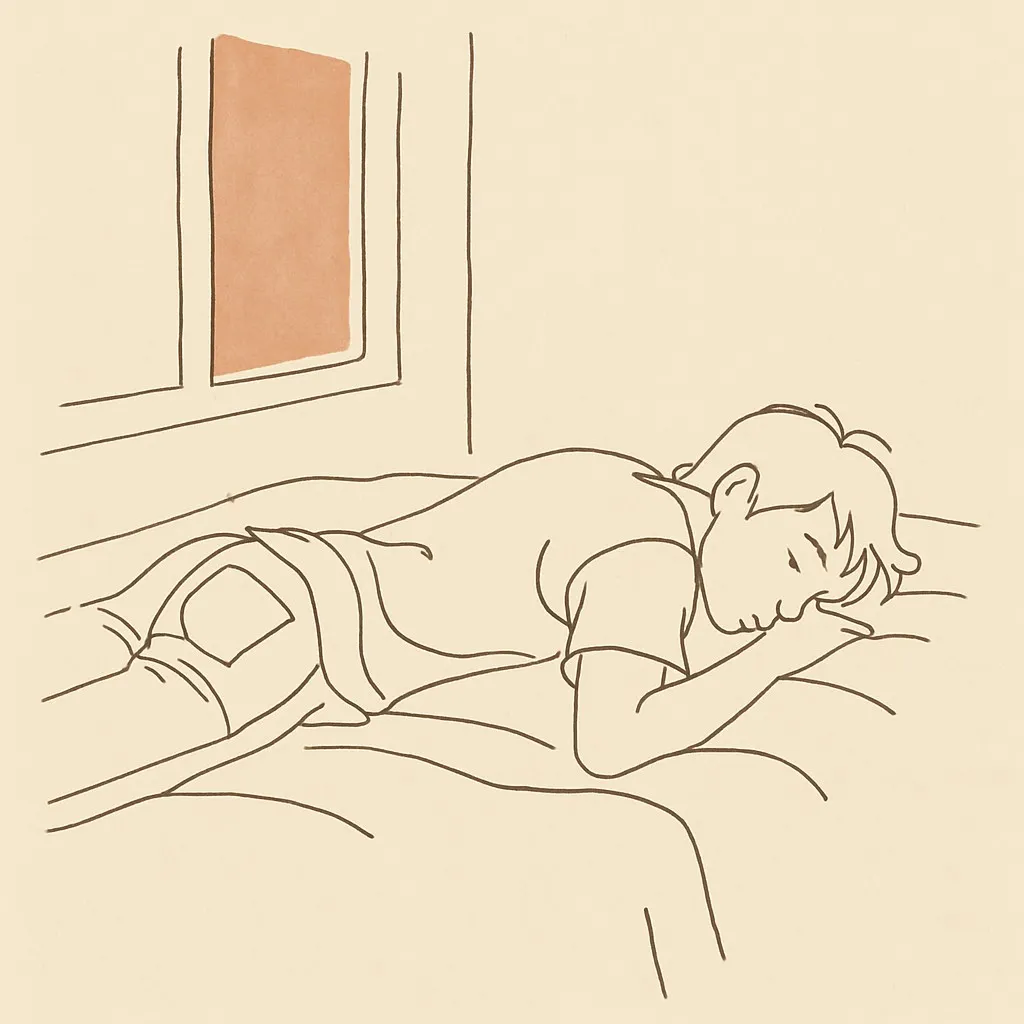
What's happening.
Your 13-year-old comes home, drops their backpack, and says into the couch cushion: “Everyone hates me.” You can hear the school day in the volume.
What we usually say — and why it backfires.
That's not true. You have lots of friends.
Name them.
Lily. Sam. Maya.
Lily ignored me at lunch. Sam was sick. Maya is in a different grade. So no.
- “That's not true” is the parent telling a teen their internal experience is wrong. They'll defend it harder.
- Naming names invites them to factually shoot down each one — which they will, because their brain is in catastrophizing mode and looking for confirmation.
- You've now had a debate about who counts as a friend, while their actual feeling went unaddressed.
What works — and why.
That sounds like a brutal day. What happened?
Lily totally ignored me at lunch. Like, on purpose. And then this girl Avery told me my outfit was 'a choice'.
Ugh. Both of those would land for me too. What do you make of the Lily thing — fight, or just busy?
...I don't know. Maybe just busy. But it felt like a fight.
Tomorrow afternoon, when you've slept on it, you'll know which it was. Tonight, want to do something low-energy with me?
- “What happened?” respects the feeling enough to find the real story instead of fighting the headline.
- “Fight, or just busy?” is the kind of distinction-making the teen brain CAN'T do alone in the spiral but CAN do with a calm voice next to it.
- Punting interpretation to tomorrow (“you'll know which it was”) is honest cognitive science — the teen brain processes social pain better after sleep.
Why this script works on a teen brain.
"Everyone hates me" is the verbal output of a brain state — specifically, the adolescent amygdala's tendency to generalize one negative social signal into a global verdict. This is not a character flaw or a habit; it's a feature of how the developing teen brain processes social pain. Adolescent neuroscience research (Crone & Dahl, Eisenberger) shows that the brain processes social rejection on the same circuitry as physical pain, and the inflammation generalizes outward fast.
Arguing the content ("that's not true, you have lots of friends") fights the symptom while ignoring the state. The state will defend itself by hunting for evidence — and your teen will find some, because everyone has been ignored by someone today. The conversation devolves into a courtroom where they're the prosecutor and they always win.
The move that works is to honor the feeling, identify the specific trigger event, and gently widen the interpretive frame without forcing it. "Fight or just busy?" is a question only a calm voice next to the teen can ask — the teen brain in the spiral can't ask it alone, but it CAN consider it once asked. The 24-hour sleep punt is also real cognitive science: the limbic system processes social pain during REM sleep, and morning verdicts are almost always softer than evening ones.
Same dynamic, different surface.
Your 15-year-old comes home from a sleepover Sunday morning crying. "I'm not invited to anything ever again. The whole group hates me now." You learn one of the girls said something cutting during truth-or-dare.
What usually happens.
You're being dramatic. One mean comment doesn't mean the whole group hates you.
You weren't there. You don't know.
I know teenage girls and you're catastrophizing.
(stops talking, goes to room)
- "You're being dramatic" names the emotional response as the problem, not the trigger. The teen now has to defend the size of their feeling.
- "I know teenage girls" is the parent claiming expertise over the teen's lived experience. Always lands as condescending.
- Catastrophizing is the clinical word and the wrong word for the moment — you can think it, but don't say it.
What works better.
Oh — what did she say?
She said I 'always make everything about me.' In front of everyone. And nobody defended me.
Ouch. That's a real one. Did she seem like she was joking-mean, or actually-mean?
...joking-mean, I think. But still.
Yeah, joking-mean still hurts. And the not-defending part is its own thing — sometimes nobody's quick enough in the moment, even when they don't agree. Sleep on it. If the group is still weird by Tuesday we'll figure out the next move; usually by Tuesday it's not.
- "What did she say?" goes straight to the specific instead of arguing the global claim — and the answer almost always shows the trigger is real but smaller than the headline.
- Joking-mean vs actually-mean is a useful distinction the teen brain can engage with once a calm voice offers it. They almost always sort it correctly.
- Naming the not-defending part separately gives the teen permission to feel both hurts as real (the comment AND the silence) without conflating them into the global verdict.
Key phrases to reach for in the moment.
- That sounds like a brutal day. What happened?
- Both of those would land for me too.
- What do you make of the [thing] — [interpretation A], or [interpretation B]?
- Tomorrow, when you've slept on it, you'll know which it was.
When to use each one.
-
That sounds like a brutal day. What happened?
Use to honor the feeling without arguing it. Open the door to the specific trigger.
-
Both of those would land for me too.
Use to validate the size of the pain. Adult acknowledgment is a regulator the teen brain can't generate alone.
-
Joking-mean or actually-mean? Fight or just busy?
Use to introduce the kind of nuance the spiraling teen brain can't access alone but CAN engage with once offered.
-
Sleep on it. If it's still [X] by [tomorrow / Tuesday], we figure out the next move.
Use to bank the verdict for after sleep. The 24-hour rule is real cognitive science.