What's happening.
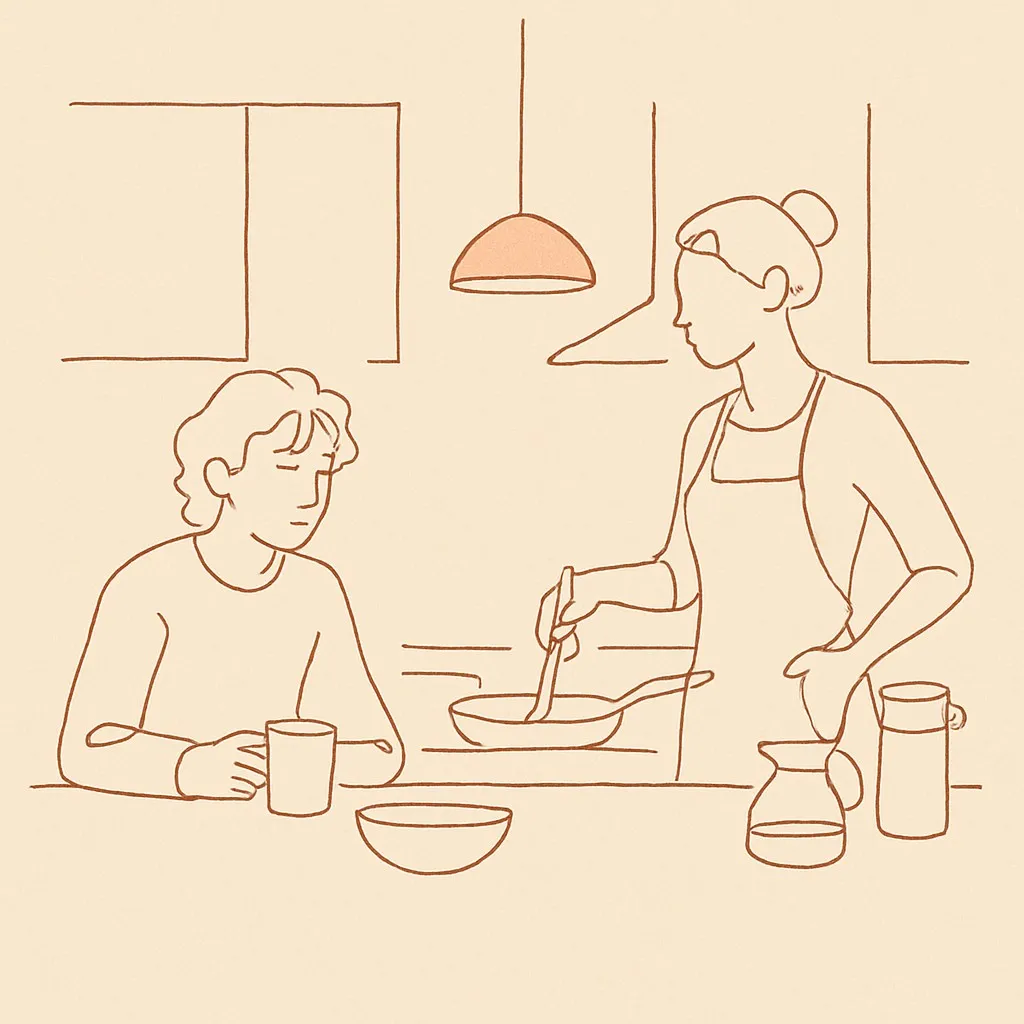
Your 14-year-old, Sunday morning: “I don't want to go to church anymore. Not just today — like, going forward.”
What we usually say — and why it backfires.
While you live in this house, you go to church. End of discussion.
I don't believe in any of it.
Don't bring belief into this. We go because we go.
(complies until 18 then never enters a church again)
- “While you live in this house” forces compliance without engagement, which produces 18-year-olds who reject the practice AND the relationship around it.
- “Don't bring belief into this” walls off the religious conversation, which the teen will then have without you.
- The compliance you get is the body in the pew; the meaning is lost.
What works — and why.
Okay. That's worth a real conversation. Tell me — is it the belief part, the social part, the boredom, or all three? And what does 'not going anymore' look like to you — never again, or less often, or only on holidays?
Mostly the boredom. And I don't believe much of it. Maybe like just Christmas and Easter — keeping the family thing but not the every-Sunday thing.
Okay. Here's where I am — Sunday mornings are when our family is together in a particular way, even if you don't connect with the religious content. I'd ask you to come twice a month, not weekly. That keeps the family rhythm we want without forcing belief you don't have. Workable?
...yeah. Workable.
- Asking which part (belief / social / boredom) gives you the real driver instead of fighting the headline.
- Asking what 'not going' looks like (never / less / holidays) usually surfaces a workable middle ground.
- “Twice a month, not weekly” preserves the family rhythm without forcing belief — a compromise most families can hold.
Key phrases to reach for in the moment.
- That's worth a real conversation.
- Is it the belief part, the social part, the boredom, or all three?
- What does 'not going anymore' look like to you — never, less often, holidays only?
- [Workable middle ground that keeps family rhythm without forcing belief.]