What's happening.
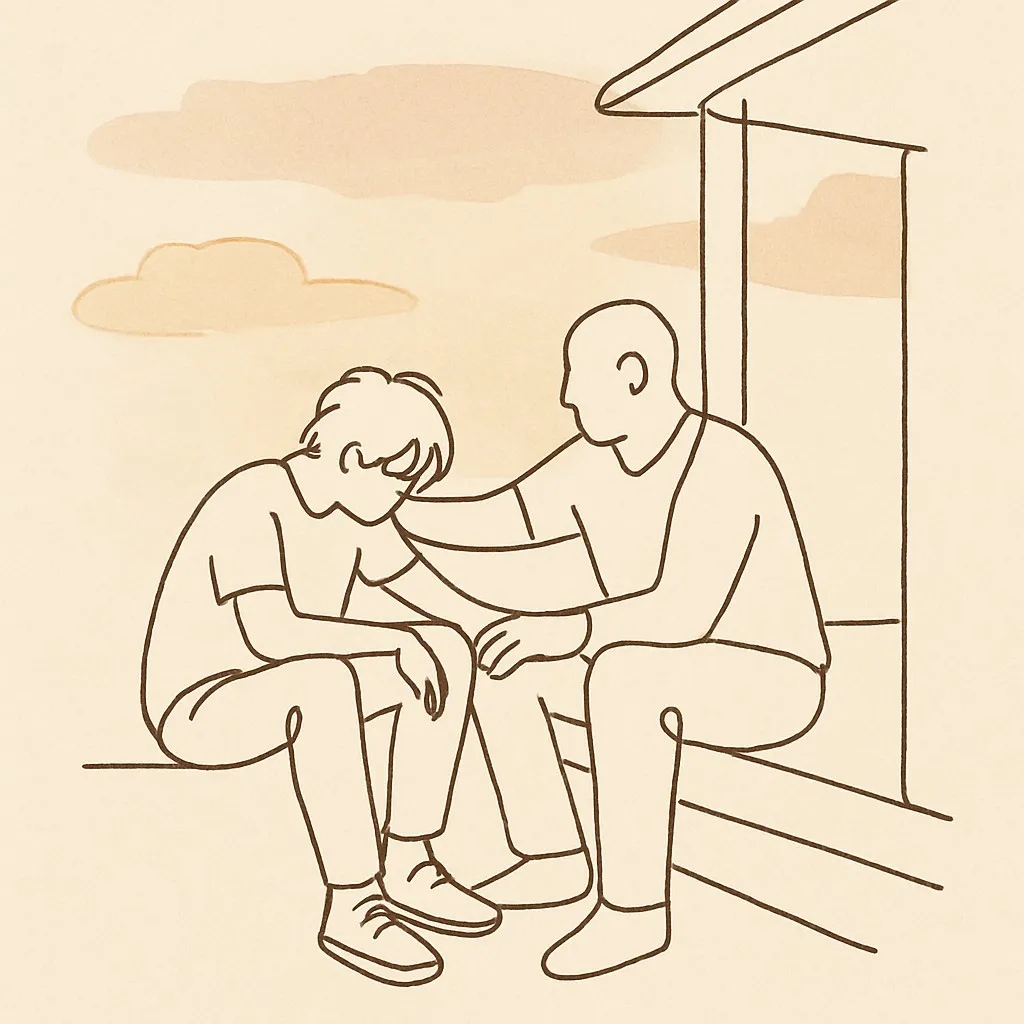
Your 15-year-old, on the porch after dinner: “I think I want to talk to a therapist. Can we find one?” You set down the iced tea.
What we usually say — and why it backfires.
Why? What's wrong?
I just want to talk to someone.
You can talk to me. I'm your mom.
(retracts the ask; the lesson is therapy = first I have to justify it)
- “Why? What's wrong?” gates the request behind explanation — which the teen may not be able to give yet, that's part of why they want therapy.
- “You can talk to me” misses that therapy is different from parent-talk, and the teen is correctly identifying the difference.
- The teen will retract within 60 seconds and not bring this up again for months.
What works — and why.
Yes, absolutely. Let me make some calls this week. Anything specific you want me to look for — someone with eating-disorder experience, someone who works with anxiety, anyone with a specific focus, or just a generally good adolescent therapist?
...just generally good. I think I have some stuff to work through but I don't really know what to name it yet.
That's exactly what good therapy is for. I'm proud of you for asking — that took clarity. We'll find someone. Insurance limits sometimes — I'll check what's covered, sliding scale if needed, telehealth if in-person logistics are hard. You'll have it within two weeks. Anything else I should know before I start calling?
- “Yes, absolutely” first, then the practical question, models that help-seeking is unconditional and the logistics are second.
- “I have stuff to work through but I don't know what to name it yet” IS the most common starting point for good adolescent therapy — name that for them.
- “Within two weeks” is concrete and prevents the teen-initiated ask from disappearing into parental procrastination.
Key phrases to reach for in the moment.
- Yes, absolutely.
- Anything specific you want me to look for — [specific focus] or just a generally good adolescent therapist?
- I'm proud of you for asking — that took clarity.
- You'll have it within two weeks.