
What's happening.
Your teen has been quiet for days. Eating less. Cancelling plans. You ask if they're okay. “I'm fine.” You ask again the next day. “I'm fine.” You know they're not.
What we usually say — and why it backfires.
Something is going on. I can tell. You have to talk to me.
I said I'm fine. Stop.
I'm taking your phone if you don't tell me what's going on.
Whatever. Take it.
- “You have to talk to me” puts a non-negotiable demand on someone whose nervous system is already overloaded. They'll shut down further.
- Threatening to take the phone connects you (the safe person) with punishment — exactly the wrong association when they may need help.
- “Whatever, take it” is a teen telling you the phone isn't even the most important thing, which should worry you more, not less.
What works — and why.
I notice you've been quieter. I'm not going to push you to talk. I just want you to know I see it.
It's whatever.
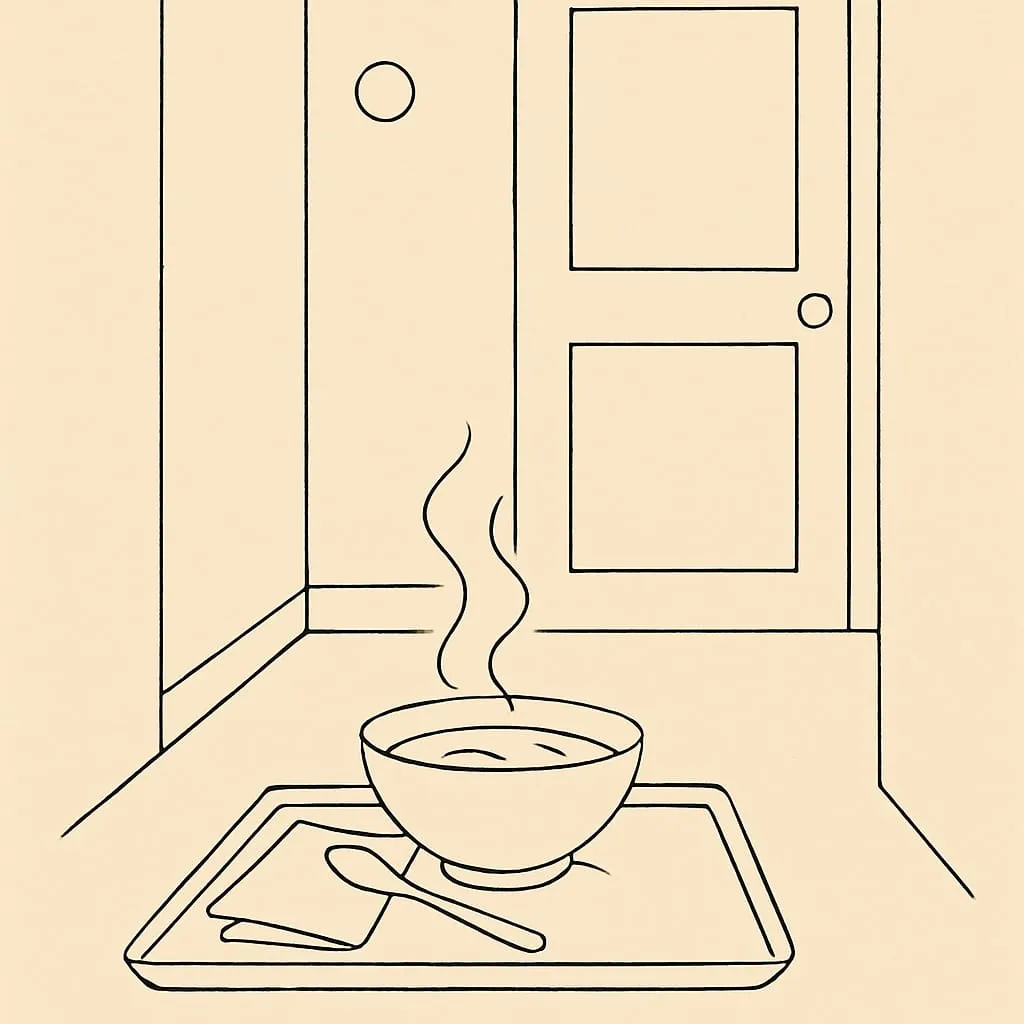
Okay. I love you. Do you want soup? I'm making soup.
(Two days later.)
Hey. I've been thinking — I'd like to find you someone to talk to who isn't me. Not because you have to be in crisis to talk to someone — just because it helps. Can we look at a couple of options together?
...okay.
- “I see it” without demanding a response is a profound act for a teen — most adults around them either ignore the change or interrogate it.
- The soup. Or the snack, the ride, the small act. Care without conversation lands when conversation can't.
- Bringing up a therapist as a forward-looking, non-emergency option (“just because it helps”) bypasses the stigma. Doing it two days later, not in the heat of the moment, gives it a chance to land.
Why this script works on a teen brain.
"I'm fine" from a clearly-not-fine teen is rarely defiance. Most often it's depleted defense — the teen is using the smallest amount of language they have left to keep from coming apart in front of you. Pushing them to elaborate when they are already at the edge of their nervous-system bandwidth is a recipe for shutdown. The thing they need is to be witnessed without being made to perform.
The research on adolescent help-seeking is clear: teens are far more likely to accept help when it is offered as a normal, ongoing option rather than as an emergency response. "Let's find someone for you to talk to" two weeks before crisis lands very differently than the same sentence in crisis. The forward-looking, non-emergency framing strips the stigma. Bringing it up two days later, not in the heated moment, gives the teen a chance to hear it without having to defend against it.
The soup matters too. Care without conversation — a snack, a ride, a blanket, a small unsolicited kindness — bypasses the verbal channel entirely and reaches the part of the teen that's running out of words. Many teens later report these small moments as the things that kept them tethered.
Same dynamic, different surface.
Your 16-year-old has stopped going to swim practice. They were captain. They cancelled meeting their best friend for coffee twice this week. When you ask, you get "I'm just tired." You feel the temperature of the whole household shift.
What usually happens.
You quit swim and you won't see Jenna. Something is wrong. You need to talk to someone.
I don't need to talk to anyone. I'm just tired.
I'm making you an appointment with Dr. Liu tomorrow.
Cancel it. I won't go.
- Listing the evidence ("you quit swim, you won't see Jenna") sounds like a case being built against the teen. They will deny everything.
- "You need to talk to someone" delivered as a verdict — not an option — guarantees the teen receives it as a punishment.
- Unilaterally booking the appointment removes their agency, which is the one thing they're holding onto. They will not go.
What works better.
(After school, parent and teen on the couch with the dog. No agenda.)
Hey. Hand me the remote.
(20 minutes of show pass.)
I noticed you skipped swim again. I'm not going to push. I just wanted you to know I noticed.
I just don't want to go.
Okay. Tell me whenever, or don't. Love you.
(Three days later, in the car.)
I've been thinking — would it be useful to talk to someone who isn't me? Not because anything is wrong, just because it can be good to have someone who's only your person.
...maybe. Yeah.
- Sharing low-stakes time (the show, the dog) before any hard question loads the relational bank account first.
- Naming the observation without demanding a response ("I just wanted you to know I noticed") gives the teen the dignity of choosing the timing.
- Bringing up therapy three days later — in a car, no audience, no eye contact — separates it from the moment of distress and lets it be heard as care, not panic.
Key phrases to reach for in the moment.
- I notice you've been quieter. I'm not going to push you to talk.
- I just want you to know I see it.
- I love you. Do you want soup?
- I'd like to find you someone to talk to who isn't me.
When to use each one.
-
I notice you've been quieter. I'm not going to push you to talk.
Use as the first acknowledgment. The 'I'm not going to push' clause is the part that makes it land.
-
I just want you to know I see it.
Use when you have no answer and don't need one. Being witnessed is the entire intervention.
-
I love you. Do you want soup?
Use literally — soup, snacks, a blanket, the dog. Care without conversation reaches the part that's out of words.
-
I'd like to find you someone to talk to who isn't me.
Use forward-looking, not in the heat. Float it more than once over weeks; teens usually accept the second or third mention.
988 Suicide & Crisis Lifeline · Text HOME to 741741 (Crisis Text Line) · 911 for immediate danger · Adolescent psychiatrist or therapist.