What's happening.
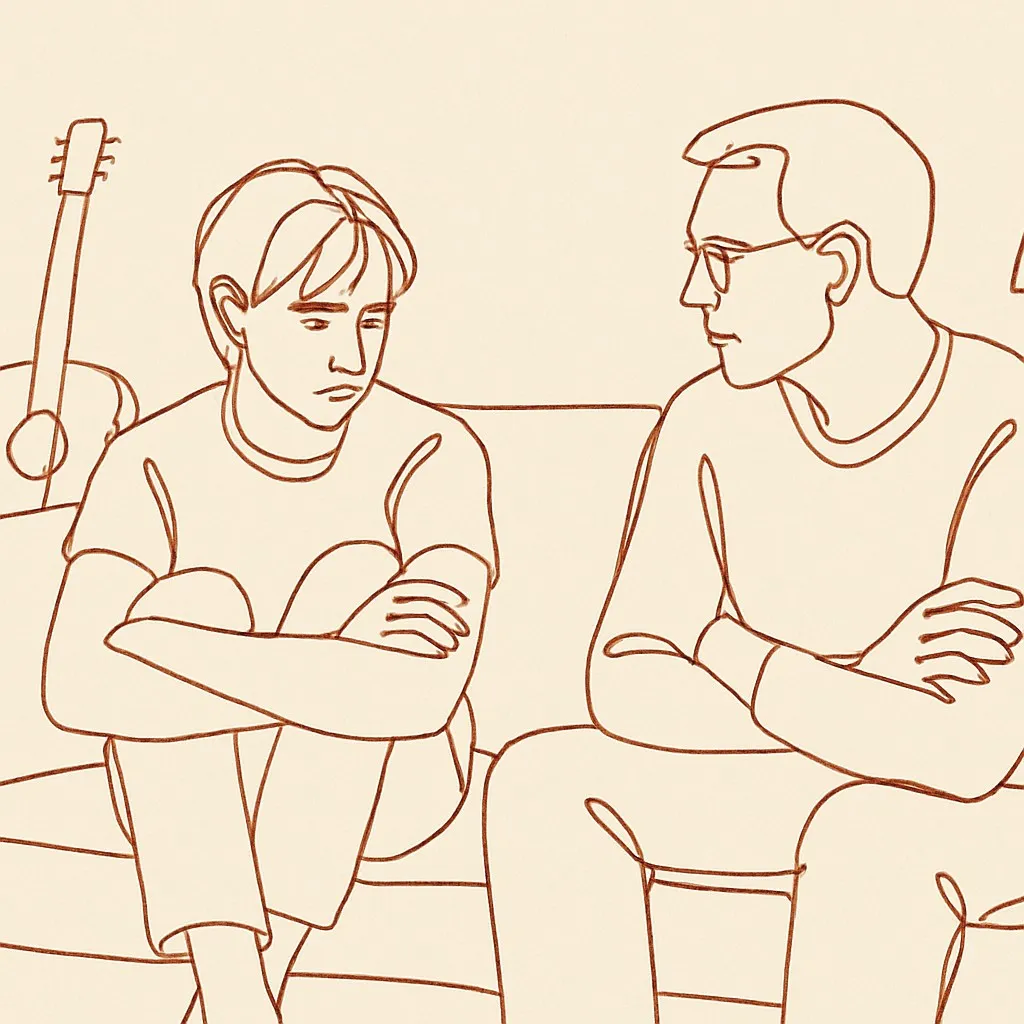
Your 14-year-old, after seven years of piano: “I want to quit. I don't enjoy it anymore.” You note the lessons cost $200/month plus the piano you bought.
What we usually say — and why it backfires.
After all the money we've put in? Absolutely not.
I'm not enjoying it. It feels like punishment.
You'll thank me later. Most adults wish they kept up an instrument.
(grinds out two more years hating it, never plays again at 18)
- Sunk-cost framing makes their childhood proof-of-concept for your investment, which is corrosive.
- “Most adults wish they kept up an instrument” may be true and is irrelevant to whether forcing it is what creates that adult.
- Two more years of forced practice = zero adult piano. Same outcome, worse relationship.
What works — and why.
Okay. Tell me — when did it stop being enjoyable, and what part is the worst part now? Lessons, practice, recitals, the music itself, the teacher?
About a year ago. It's mostly the daily practice. I still like playing for fun, just not the structured part anymore.
Interesting. That's not 'quit piano,' that's 'change the relationship with piano.' What if we did this — no formal lessons, no practice quota, no recitals; you keep the piano, you play whatever you want when you feel like it, you take lessons again if you ever want to. The instrument is yours forever. We're not selling it. Workable?
...actually yeah. I'd still play, just not for someone else.
- Asking which specific part is the bad part separates the sport/activity from the structure around it — often the structure is the problem, not the activity.
- Renaming “quit” as “change the relationship” gives the teen room to keep what they like without the part they hate.
- Keeping the instrument is the parental signal: this isn't punishment for quitting, and the door stays open forever.
Key phrases to reach for in the moment.
- When did it stop being enjoyable, and what part is the worst part now?
- That's not 'quit,' that's 'change the relationship with [the activity].'
- What if we did [no formal structure, you keep the thing, take lessons again if you ever want to].
- The [instrument / equipment] is yours forever. We're not selling it.