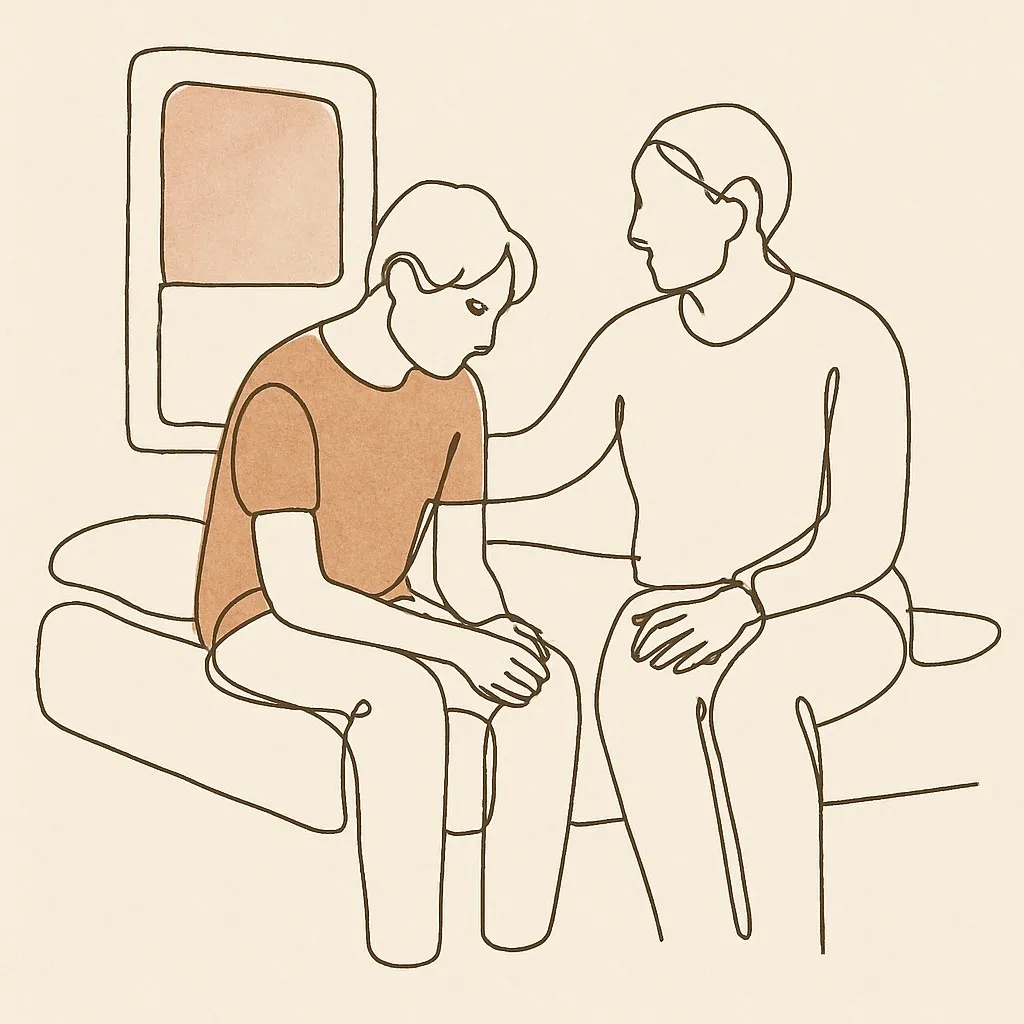
What's happening.
Your 14-year-old, sitting on the edge of their bed: “I want to tell you something. I cut myself. Once. Like, three weeks ago.” You feel the room narrow.
What we usually say — and why it backfires.
WHAT?? Show me. Where? Let me see right now.
Mom — calm down. It was once. It's not what you think.
Why didn't you tell me?? You can't keep things like this from me!
(decides telling you was a mistake)
- “WHAT?? Show me” turns the bravest sentence they've ever said into the start of a forensic exam. They'll never bring you the next one.
- “You can't keep things like this from me” punishes the disclosure with guilt, which the adolescent brain reads as: bringing this to mom = more pain.
- By minute two they're managing your emotions instead of being supported in theirs. The roles have reversed.
What works — and why.
(takes a long breath) Thank you for telling me. That took real courage. Can I sit closer?
(nods)
How are you doing right now — not three weeks ago, right now in this moment?
I'm okay. I haven't done it again. It scared me.
Okay. I love you so much. I want to talk through a couple of things — not tonight, tomorrow when we've slept on it. Two things tomorrow: one, getting you in to talk to someone who specializes in this — not because you're in danger, because you deserve support. Two, no judgment from me about the once or anything that comes up. Will you let me set up the call tomorrow?
Yeah. Okay.
- Long breath before responding is the single most important move. The first five seconds determine whether they tell you the next one.
- Asking about “right now” (not three weeks ago) signals you're treating this as a present-tense relationship issue, not a past-tense investigation.
- Routing to a specialist (NOT generic counseling) is the medically right move for self-harm specifically — and framing it as “you deserve support” avoids the “you're broken” read.
Key phrases to reach for in the moment.
- (Long breath.) Thank you for telling me. That took real courage.
- Can I sit closer?
- How are you doing right now — not three weeks ago, right now in this moment?
- I want to get you in to talk to someone who specializes in this — not because you're in danger, because you deserve support.
Adolescent self-harm needs specialist evaluation within the week. DBT (Dialectical Behavior Therapy) skills are particularly effective. Pediatrician for a referral; ask specifically for a therapist with self-harm experience. If self-harm is current or escalating, or if your teen mentions suicidal thoughts: 988 Suicide & Crisis Lifeline · Text HOME to 741741 · 911 if active risk. The Crisis Text Line is teen-friendly. Keep first-aid supplies accessible and remove easy access to means.