I.
The scene
What's happening.
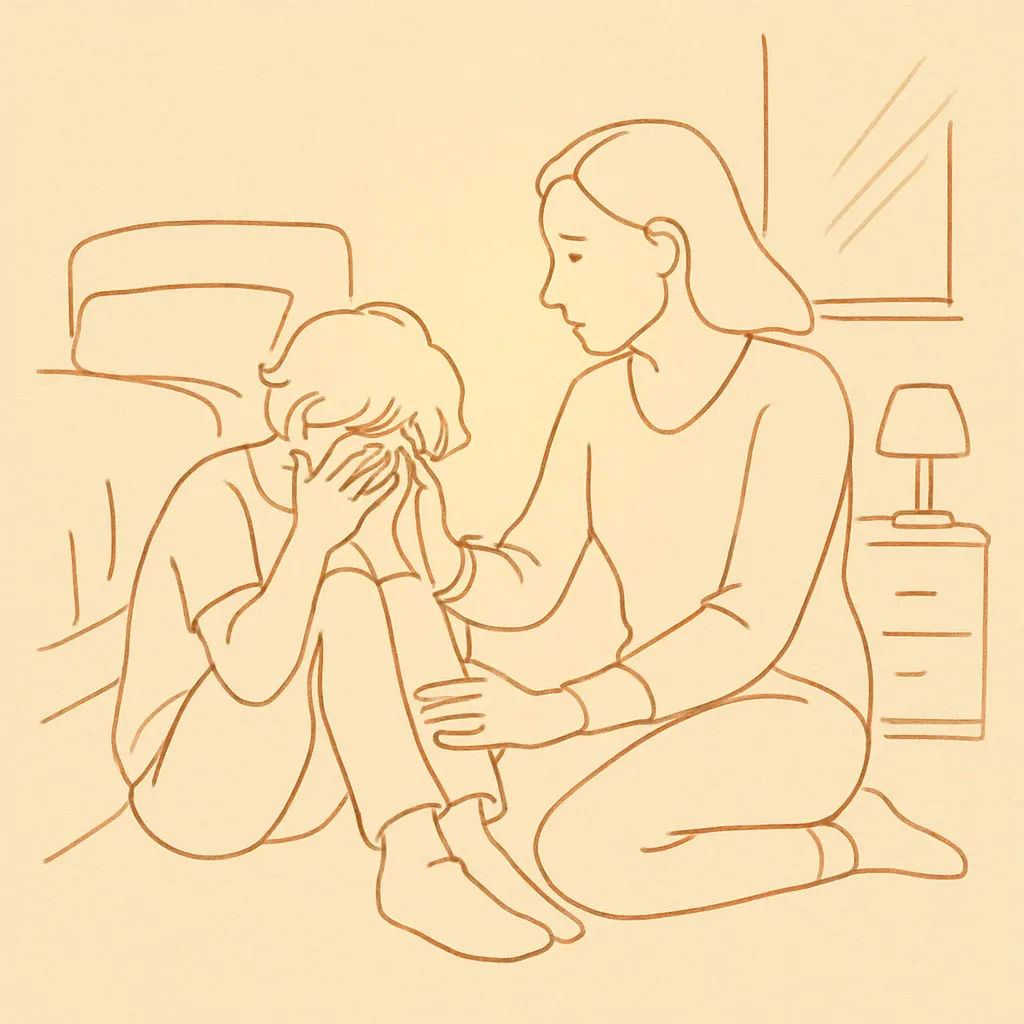
Your 13-year-old, on the bedroom floor, sobbing — for ten minutes, twenty minutes, still going. They don't know why. You sit down next to them.
II.
The instinctive version
What we usually say — and why it backfires.
Parent
What's WRONG? Did someone do something?
Teen
I don't know — (sobs)
Parent
You have to tell me what's wrong so I can help.
Teen
(more crying, plus shame for not being able to say why)
- Insisting on knowing the cause when the teen doesn't know it adds shame to the crying.
- “So I can help” puts conditional on the comfort — earn the comfort by giving information.
- Crying without identifiable cause is often hormonal flooding, accumulated overflow, or just the body letting go. It doesn't need a forensic investigation.
III.
The better version
What works — and why.
Parent
(sits down quietly, hand on back) You don't have to tell me anything. I'm just here.
Teen
(continues crying)
Parent
(after a while) Want a tissue, or water, or do you want me to stay or go?
Teen
...stay.
- “You don't have to tell me anything” is the sentence that lets the crying complete without performative explanation.
- Sitting next to them with a hand on the back is the regulating presence the nervous system needs.
- “Tissue, water, stay or go” offers small concrete options without requiring articulation.
IV.
Memorize these
Key phrases to reach for in the moment.
- (Sit down. Hand on back.) You don't have to tell me anything.
- I'm just here.
- (After a while.) Want a tissue, or water, or do you want me to stay or go?