I.
The scene
What's happening.
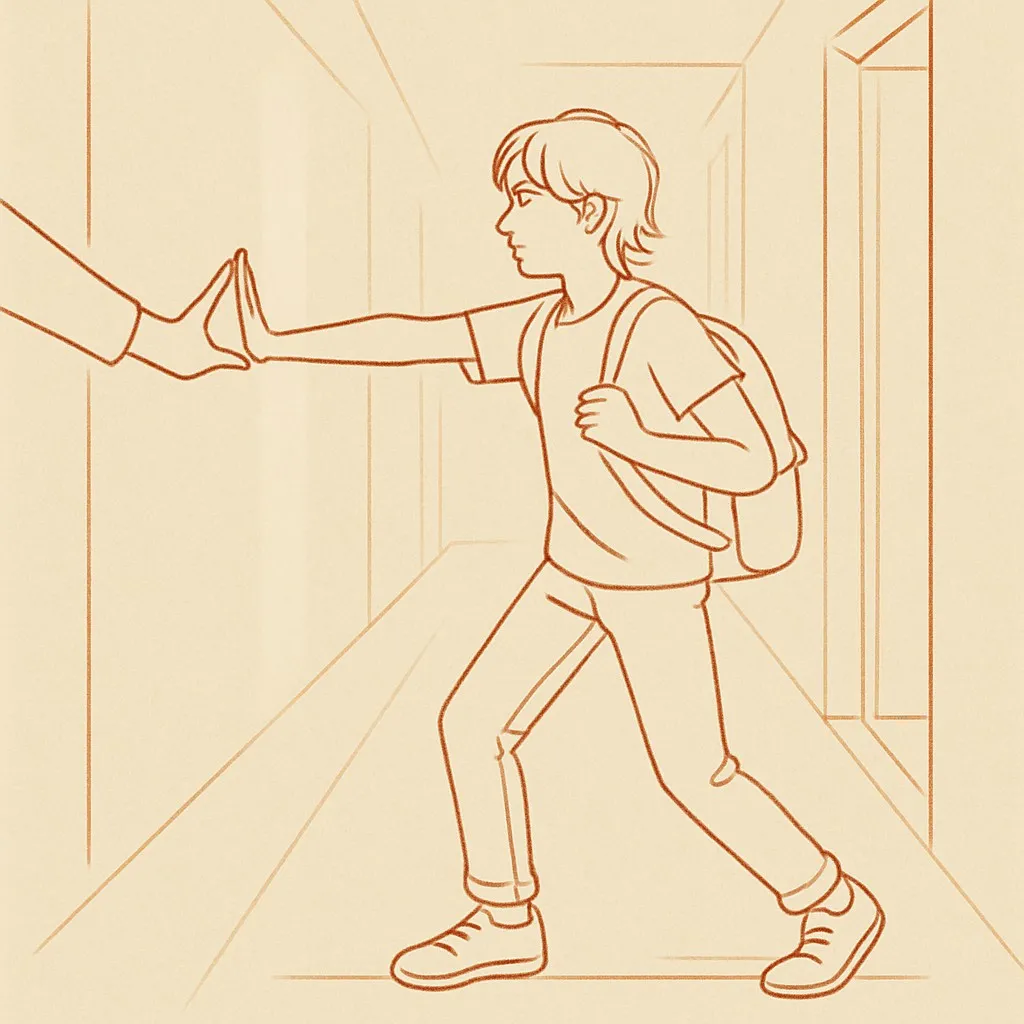
You reach to give your 13-year-old a hug after a hard day. They step back: “Don't touch me. Please.” You let your arm fall.
II.
The instinctive version
What we usually say — and why it backfires.
Parent
I was just trying to give you a hug.
Teen
I don't want one.
Parent
Fine. Be that way.
Teen
(absorbs that asserting body autonomy makes mom cold)
- “I was just trying to give you a hug” argues the intent against the stated boundary.
- “Fine. Be that way.” punishes the boundary with cold withdrawal.
- Long-term: teens whose body-autonomy boundaries got punished often have hard time saying no in adult intimate contexts.
III.
The better version
What works — and why.
Parent
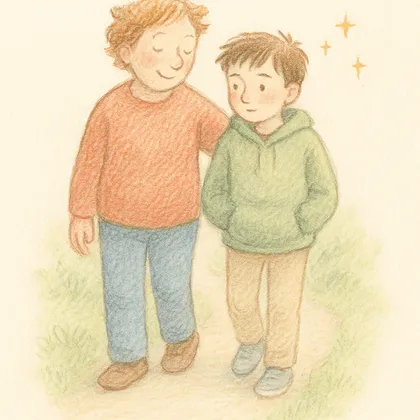
Got it. (steps back, smiles) Thanks for telling me. Want some space, or just space from touching?
Teen
Just space from touching right now.
Parent
Cool. I'll be in the kitchen if you want to talk later.
- “Got it. Thanks for telling me” affirms the boundary without making it a thing.
- Distinguishing 'space' from 'space from touching' models the kind of nuanced consent language the teen needs to learn.
- Staying nearby without touching is the proof that the boundary is honored AND the relationship is intact.
IV.
Memorize these
Key phrases to reach for in the moment.
- Got it. Thanks for telling me.
- Want some space, or just space from touching?
- I'll be [nearby] if you want to talk later.