What's happening.
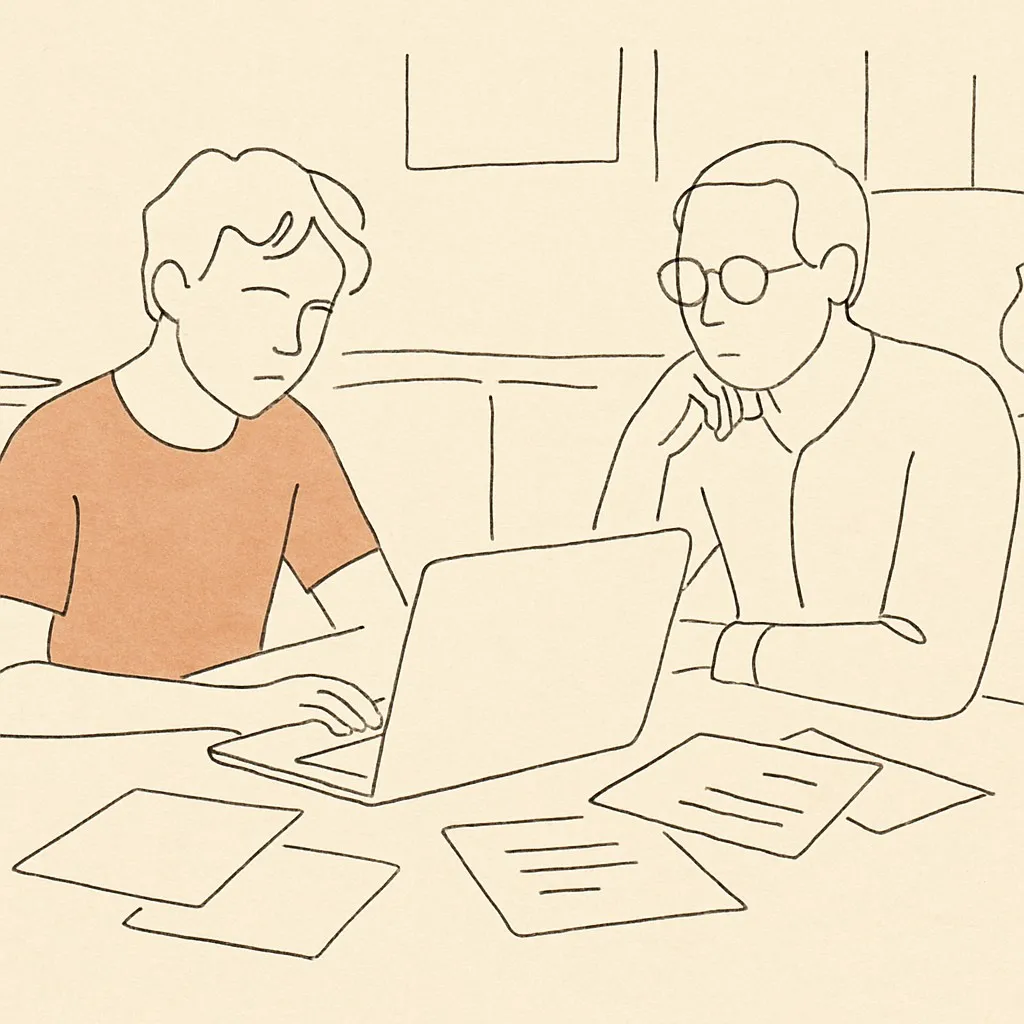
11pm. Your 16-year-old: “Can you just write my English essay for me? It's due at 8am.” You inhale.
What we usually say — and why it backfires.
Absolutely not. That's cheating.
Everyone uses ChatGPT now. Same thing.
It's not the same thing. You need to do your own work.
(uses ChatGPT, doesn't tell you, gets a B+)
- “Absolutely not” without unpacking the request leaves the actual situation — 11pm, 9 hours to deadline — unsolved.
- “It's not the same thing” is true and a debate the teen will win in their head if you don't articulate the WHY.
- The teen quietly turns to ChatGPT and you never have the conversation about what the line actually is.
What works — and why.
Okay, two things. First: write it for you? No, that's plagiarism and it'd be your name on something I wrote. Second: what's actually going on? It's 11pm and you're freaking out — did you not start, or did you start and get stuck?
Started. Got stuck on the thesis.
Got it. I can talk thesis with you. I can ask you questions until you find one that works. I will NOT write a sentence that goes into the essay. Same rule applies to ChatGPT — use it to brainstorm, never to generate text you submit. Sound fair?
Yeah. Can we start now?
- Splitting the literal ask (“no, that's plagiarism”) from the underlying issue (“why are we here at 11pm”) lets you say no AND help at the same time.
- Articulating the rule about ChatGPT (“brainstorm yes, generate text no”) is the actual policy conversation worth having in 2026, and most teens accept it once it's named.
- Offering to ask thesis questions until they find one is the parent move that builds real writing skill — and they'll use it next time without asking.
Key phrases to reach for in the moment.
- Write it for you? No. What's actually going on?
- I can ask you questions until you find one that works. I will NOT write a sentence that goes into the essay.
- Same rule applies to ChatGPT — use it to brainstorm, never to generate text you submit.
- Can we start now?