The short version.
'Main character' is a TikTok-native aesthetic and identity move: live like you're the protagonist, score your walks with cinematic music, treat ordinary moments as story beats. The trend has positive framings (anti-people-pleasing) and harmful ones (extras-only thinking about everyone else, fragility when you stop feeling central).
The platforms and contexts.
TikTok, Instagram Reels, Pinterest aesthetic boards. The vocabulary leaks into normal conversation — 'main character energy' is now standard teen slang.
The timeline.
Trend emerged ~2020 with the rise of 'aesthetic TikTok.' Sustained as a core teen identity move through 2024–25.
The core facts a parent needs.
- Positively framed, it's just self-respect. Negatively framed, it's a license to treat everyone else as a supporting cast and feel cosmically wronged when they don't comply.
- Tied closely with depression and anxiety: when you cast yourself as protagonist, every ordinary disappointment becomes plot-defining, and the script never matches the day.
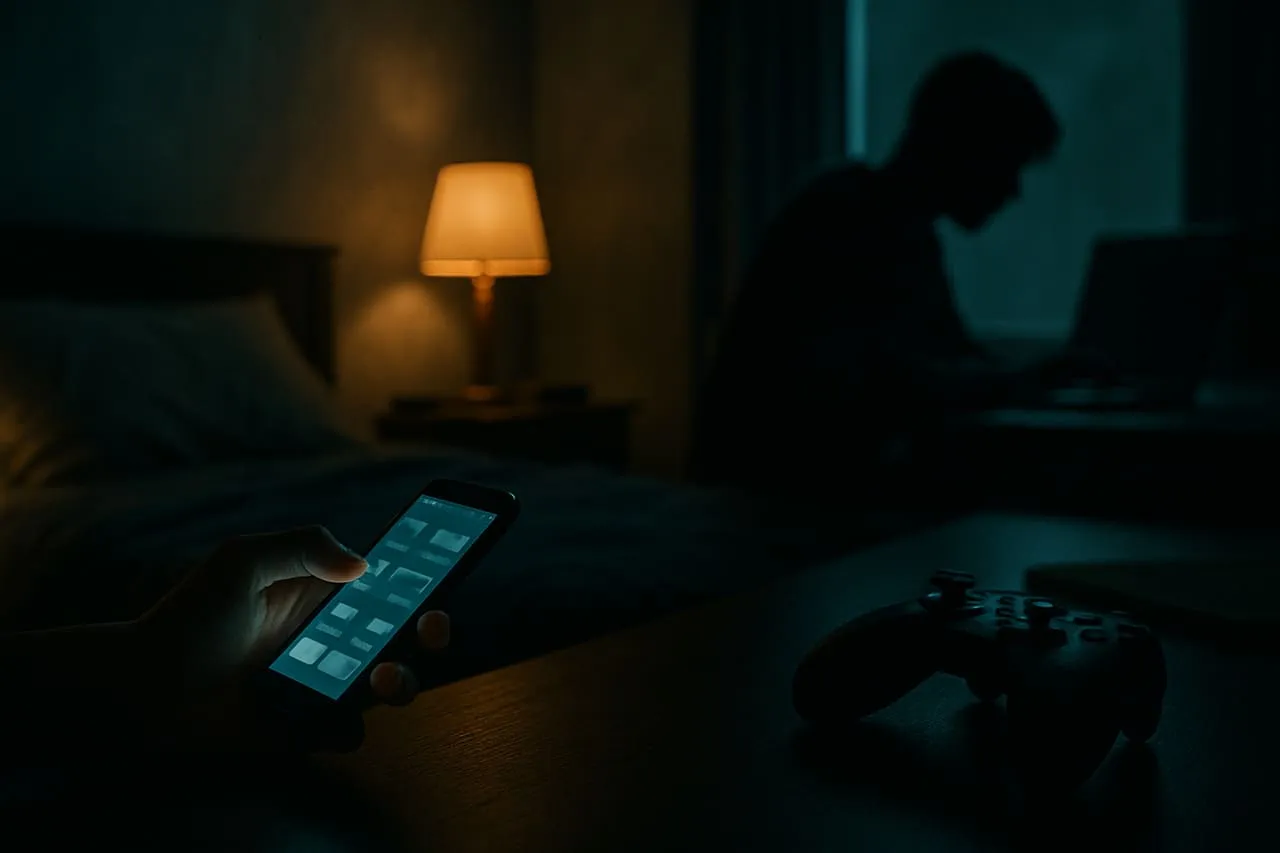
- Heavy filtering of life into 'cinematic moments' worth posting, with everything else feeling like wasted footage.
What's actually at stake.
- Friendship damage when other people don't play the supporting role you cast them in.
- Depression when reality doesn't match the highlight reel — every Tuesday is 'a flop episode.'
- Erosion of tolerance for unstructured, unobserved time — the kind of time where actual identity development happens.
The talk that lands — try it now.
Imagine you just learned your teen brushed up against this. You have 60 seconds before the conversation begins. What you say first decides whether the next 20 minutes opens the door — or slams it.
"What were you thinking? Give me your phone — now."
Panic + punishment in the same breath. The teen reads it as "every honest detail will be used against me." The phone comes; the truth doesn't.
What would you open with instead? Picture it for a beat — then…
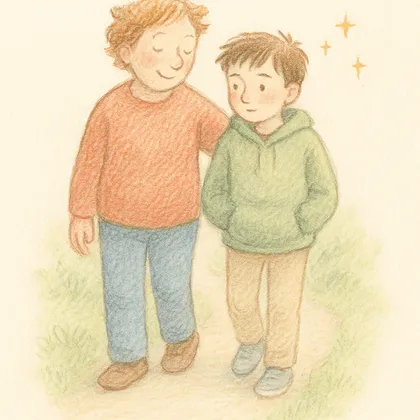
"I want to ask about something — no trouble, I just want to understand it. Can we sit for five minutes?"
Curiosity, not court. Promise of safety in the first sentence. Time-bounded so it doesn't feel like a trap. Almost every teen says yes to five minutes.
Then, in those 5 minutes:
- Counter-frame in conversation: 'You're a person, not a character. Real life has scenes nobody watches and that's where the best stuff happens.'
- Reward un-cinematic moments out loud: 'I'm so glad we just had that ordinary breakfast.' Normalizing the uncinematic helps.
- If the main-character thinking is hardening into entitlement or isolation, individual therapy with someone who understands social-media-mediated narcissism patterns.
Try saying it out loud once before you close this tab. Cool parents rehearse — yelled parents wing it.
Practice 200 more parent–teen scripts →Concrete next steps.
- Counter-frame in conversation: 'You're a person, not a character. Real life has scenes nobody watches and that's where the best stuff happens.'
- Reward un-cinematic moments out loud: 'I'm so glad we just had that ordinary breakfast.' Normalizing the uncinematic helps.
- If the main-character thinking is hardening into entitlement or isolation, individual therapy with someone who understands social-media-mediated narcissism patterns.
Call or text 988 (Suicide & Crisis Lifeline, 24/7) · Text HOME to 741741 (Crisis Text Line) · Find a child psychiatrist at aacap.org · For immediate danger, call 911.