The short version.
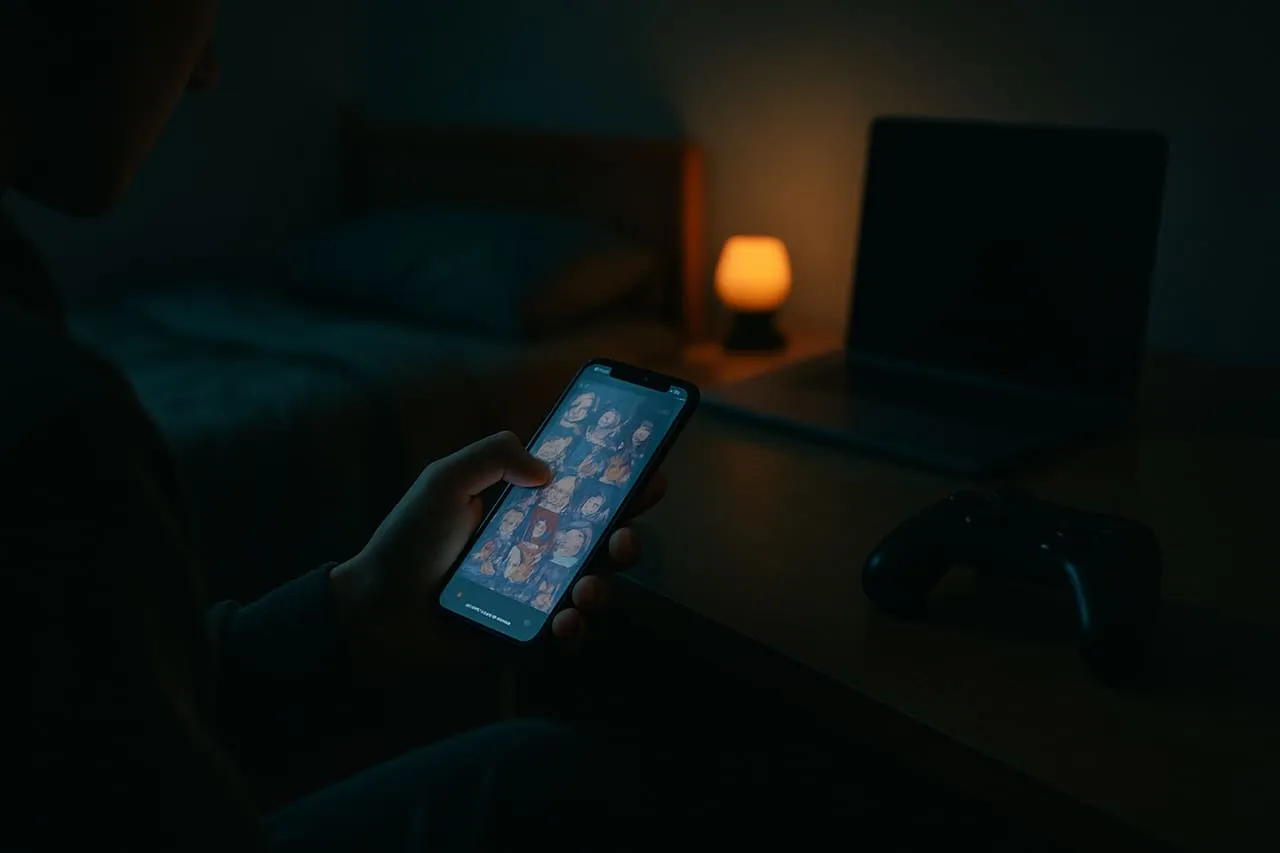
Gacha = Japanese capsule-toy machine. Modern gacha mobile games (Genshin Impact, Honkai Star Rail, Wuthering Waves, Fate/Grand Order, Blue Archive) gate their best characters behind randomized 'pulls' bought with in-game currency, which is bought with real money. The pull animation is engineered to maximize dopamine release. Stated odds for top-tier characters are 0.6%-1.6%.
The platforms and contexts.
iOS and Android app stores. Companion Discord servers, YouTube 'pull reaction' content, Reddit gacha-specific subs (r/Genshin_Impact). PayPal, Apple Pay, Google Play as payment.
The timeline.
Genshin Impact launched 2020 and went mainstream with U.S. teens 2020–2022. Multiple Belgian and Dutch regulatory rulings have classified gacha as gambling; U.S. has not.
The core facts a parent needs.
- The 'pity' system (guaranteed top-tier after N pulls) is sold as mercy but is actually maximum-spend engineering — you're guaranteed to spend through to it.
- Gacha math: pulling on a banner with 0.6% top-tier odds and a 90-pull pity costs roughly $200 of in-game currency for one guaranteed character.
- Teen brains respond to variable-ratio reinforcement (slot-machine math) far more strongly than adults. Habit formation is fast.
What's actually at stake.
- Real money lost — teen-account chargeback disputes for gacha games run into the thousands.
- Gambling pathway: kids hooked on gacha at 13 are significantly more likely to pursue sports betting and crypto trading at 18.
- Hours of daily playtime maintaining daily-login rewards and event grinds, displacing sleep and schoolwork.
The talk that lands — try it now.
Imagine you just learned your teen brushed up against this. You have 60 seconds before the conversation begins. What you say first decides whether the next 20 minutes opens the door — or slams it.
"What were you thinking? Give me your phone — now."
Panic + punishment in the same breath. The teen reads it as "every honest detail will be used against me." The phone comes; the truth doesn't.
What would you open with instead? Picture it for a beat — then…
"I want to ask about something — no trouble, I just want to understand it. Can we sit for five minutes?"
Curiosity, not court. Promise of safety in the first sentence. Time-bounded so it doesn't feel like a trap. Almost every teen says yes to five minutes.
Then, in those 5 minutes:
- Don't save payment in the app. Buy in-game currency at retail (steam cards, Apple gift cards) and set a monthly cap.
- Talk about the math out loud once. Then again at 15, again at 17. The 0.6% number lands.
- If the daily-login compulsion is interfering with sleep or grades, treat as a habit problem — not a hobby. Time-limited rewards are the addiction vector; remove access to those specific events.
Try saying it out loud once before you close this tab. Cool parents rehearse — yelled parents wing it.
Practice 200 more parent–teen scripts →Concrete next steps.
- Don't save payment in the app. Buy in-game currency at retail (steam cards, Apple gift cards) and set a monthly cap.
- Talk about the math out loud once. Then again at 15, again at 17. The 0.6% number lands.
- If the daily-login compulsion is interfering with sleep or grades, treat as a habit problem — not a hobby. Time-limited rewards are the addiction vector; remove access to those specific events.
Call or text 988 (Suicide & Crisis Lifeline, 24/7) · Text HOME to 741741 (Crisis Text Line) · Find a child psychiatrist at aacap.org · For immediate danger, call 911.