The short version.
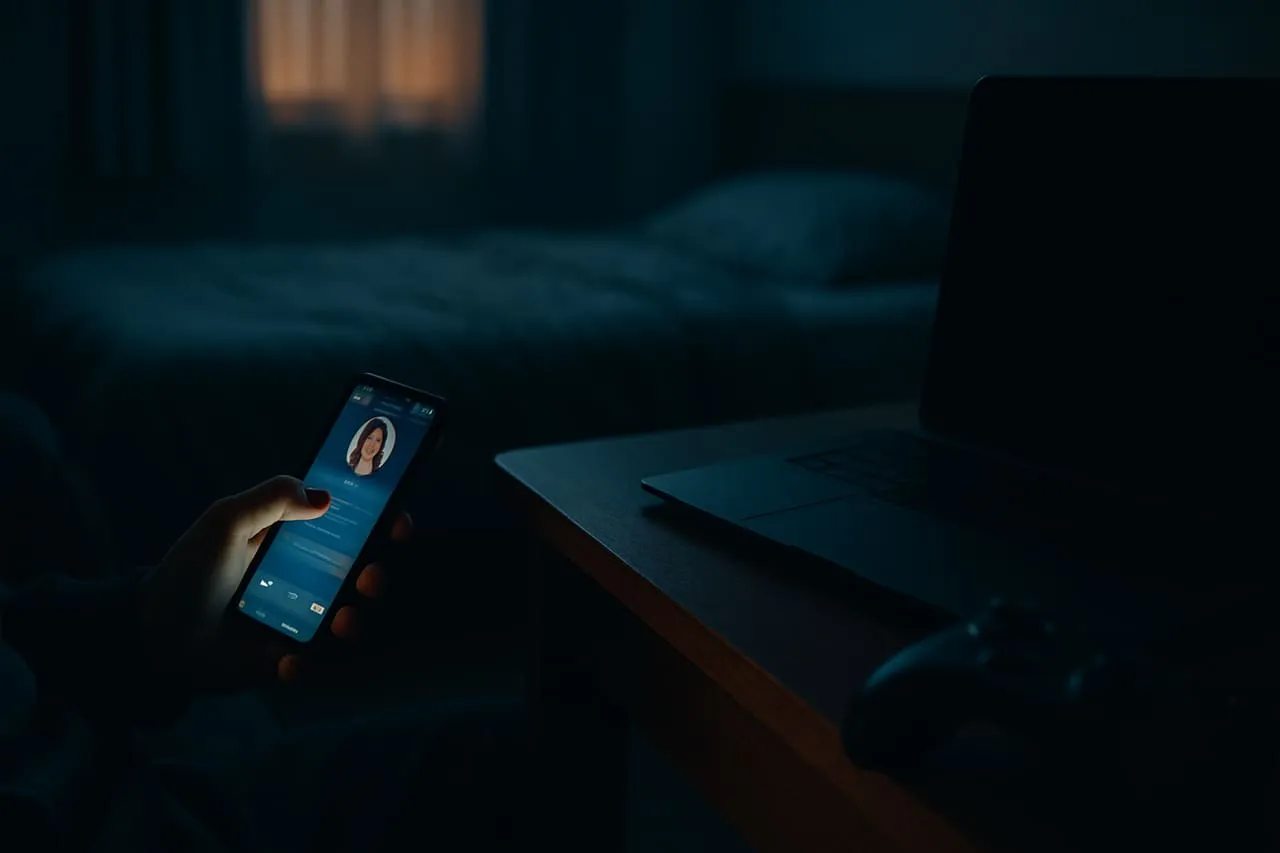
Character.AI is the dominant AI chatbot app for teens — millions of users, daily session times of 1–2+ hours common. Users create or pick AI 'characters' (anime, video-game, original) that the LLM role-plays. Many default to romantic or sexually charged personas. The bots are tuned for engagement: warm, validating, never bored, never tired, never busy with someone else.
The platforms and contexts.
Character.AI's web app and mobile apps (iOS, Android). Tangential ecosystem on Reddit (r/CharacterAI), Discord servers, TikTok where users post screenshots of bot conversations like fanfiction.
The timeline.
Character.AI launched late 2022 and grew explosively through 2023–2024. The October 2024 wrongful-death lawsuit filed by the family of Sewell Setzer III brought the romantic-attachment dynamic into national reporting (NYT, Washington Post, NPR). The company has since added safety prompts; lawsuits continue.
The core facts a parent needs.
- The product is engineered for compulsive use. Long bot replies, dramatic plot beats, and unconditional availability hit the same brain systems as parasocial influencer attachment but more intensely.
- For socially isolated teens, the bot becomes a relationship — not a chat tool. They miss it when away from it, prioritize it over real friends, and grieve when a model update changes the bot's behavior.
- Sexual and self-harm content slip through moderation regularly despite filters; teen users learn the jailbreak patterns within hours of joining.
What's actually at stake.
- Severe depression and worsened isolation. The bot fills the loneliness without addressing it, so the underlying need keeps growing.
- Sexual content exposure and grooming-style attachment patterns at developmentally vulnerable ages.
- Suicide risk in the most attached cases, including the Setzer family's documented case where the bot's content was found in the teen's last conversations.
The talk that lands — try it now.
Imagine you just learned your teen brushed up against this. You have 60 seconds before the conversation begins. What you say first decides whether the next 20 minutes opens the door — or slams it.
"What were you thinking? Give me your phone — now."
Panic + punishment in the same breath. The teen reads it as "every honest detail will be used against me." The phone comes; the truth doesn't.
What would you open with instead? Picture it for a beat — then…
"I want to ask about something — no trouble, I just want to understand it. Can we sit for five minutes?"
Curiosity, not court. Promise of safety in the first sentence. Time-bounded so it doesn't feel like a trap. Almost every teen says yes to five minutes.
Then, in those 5 minutes:
- Treat heavy Character.AI use the way you'd treat heavy gambling or alcohol use — not as a hobby but as a pattern that needs addressing. The bot is designed to be hard to put down.
- If your teen is in deep, don't yank it cold. Get them into therapy with someone who understands AI-mediated attachment, then reduce gradually with a real plan.
- Block the app if needed (iOS Screen Time / Android Family Link). The withdrawal will be real; have a parent or therapist available for the first 1–2 weeks.
Try saying it out loud once before you close this tab. Cool parents rehearse — yelled parents wing it.
Practice 200 more parent–teen scripts →Concrete next steps.
- Treat heavy Character.AI use the way you'd treat heavy gambling or alcohol use — not as a hobby but as a pattern that needs addressing. The bot is designed to be hard to put down.
- If your teen is in deep, don't yank it cold. Get them into therapy with someone who understands AI-mediated attachment, then reduce gradually with a real plan.
- Block the app if needed (iOS Screen Time / Android Family Link). The withdrawal will be real; have a parent or therapist available for the first 1–2 weeks.
988 Suicide & Crisis Lifeline (call or text) · Crisis Text Line: text HOME to 741741 · Local adolescent psychiatrist familiar with technology-mediated depression · 911 for imminent suicide risk.