Social exclusion lights up the brain's pain alarm.
The short version.
Being deliberately left out — ostracism — is one of the most distressing things a social creature can experience. Brain studies show that exclusion activates regions overlapping with those that process physical pain. For teens, who are wired to seek belonging, even a small snub can feel like a wound. The sting is fast and largely automatic; it can hit even when the excluded person knows the others are strangers or even a computer. That's how primed humans are to detect rejection.
What researchers actually find.
- Classic experiments show that being excluded from a simple ball-tossing game triggers real distress and activity in pain-related brain regions.
- Exclusion threatens four basic needs at once: belonging, self-esteem, control, and a sense of meaning.
- Adolescents react more strongly to exclusion than adults do, on average.
- The pain of being left out can spike even when the slight is trivial or unintentional.
You might recognize this.
- Your teen is crushed by a party they weren't invited to, even one they didn't want to attend.
- Seeing friends' posts of an event without them can ruin an evening.
- Being 'left on read' in a group chat lands like a personal rejection.
How to help.
- Don't minimize it ('you didn't even like them') — validate first: 'Being left out really stings, I get it.'
- Help them widen their circle so no single group holds all their belonging.
- Model recovering from your own small exclusions out loud, so they see it passes.
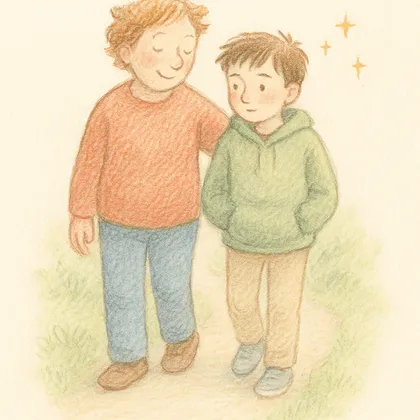
If your teen got left out today, skip the fix-it advice — just say 'that hurts' and sit with them for two minutes.
They're being dramatic about not getting invited.
The brain processes exclusion much like injury. The pain is real, even if the event looks small from the outside.
Most exclusion pain fades quickly; ongoing, targeted exclusion is a form of bullying and deserves a more active response.
This is a plain-words summary of well-established psychology — a map, not a diagnosis. If your teen is struggling in a way that worries you, a pediatrician or licensed mental-health professional is the right next step. In crisis: call or text 988 (Suicide & Crisis Lifeline, 24/7) · text HOME to 741741 · call 911 for immediate danger.