
I.
The scene
What's happening.
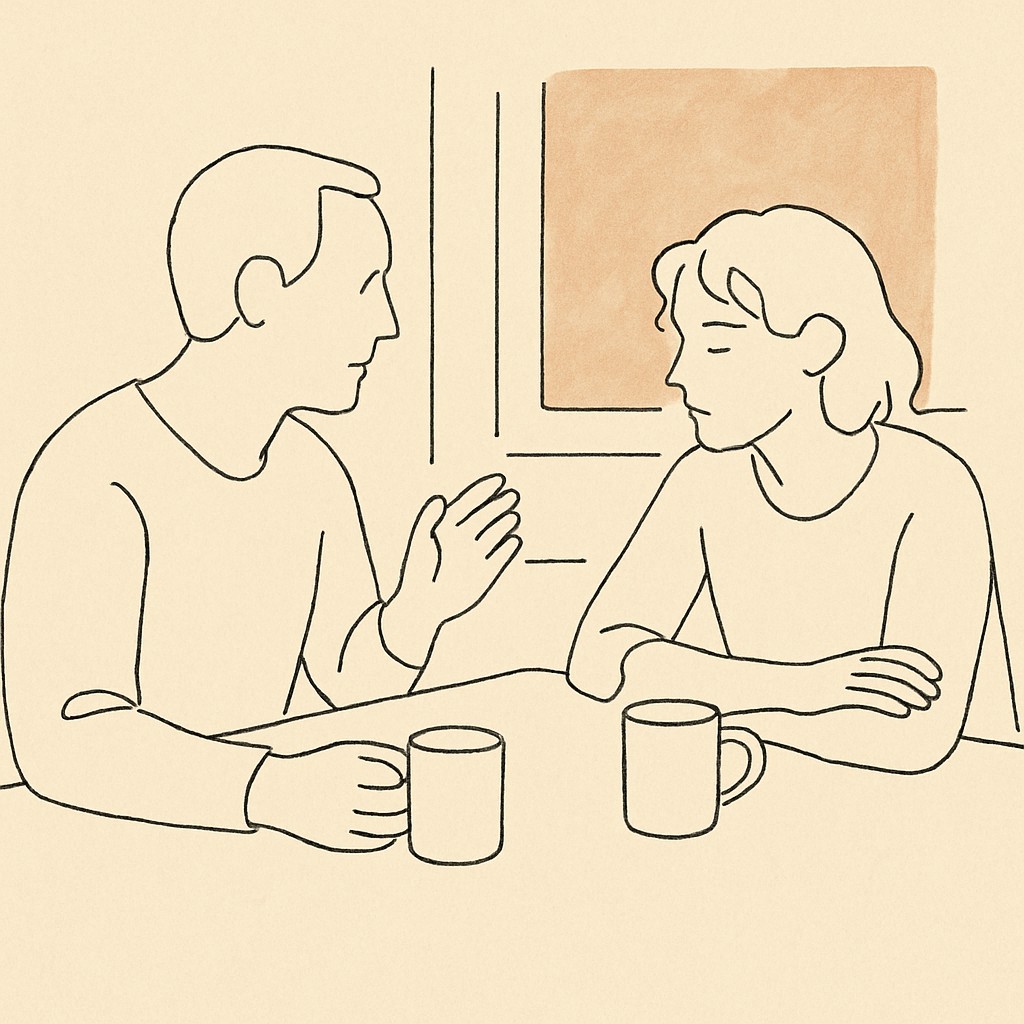
Saturday morning. Your 14-year-old, over breakfast: “Mom. You yelled at me yesterday in front of Lily. It was actually really embarrassing.”
II.
The instinctive version
What we usually say — and why it backfires.
Parent
I yelled because you weren't listening.
Teen
I was listening.
Parent
Then you should have responded. Don't blame me for your behavior.
Teen
(catalogs another unowned yell; stops sharing 'how that landed' for me)
- “I yelled because you weren't listening” justifies the yell instead of addressing the harm.
- “Don't blame me for your behavior” reverses the disclosure into an attack on them.
- Long-term: parents who never apologize for yelling produce adults who never apologize for yelling.
III.
The better version
What works — and why.
Parent
Yeah. I shouldn't have. I was frustrated and I let it out at high volume and I did it in front of your friend, which made it worse. I'm sorry. That wasn't fair to you.
Teen
...thanks. It was a lot.
Parent
I know. I'll try to catch it earlier next time — and if I don't, you have every right to call me on it. Even in the moment. Even in front of your friend.
- “I shouldn't have” owns the action without dragging the teen's behavior into the apology.
- Naming what made it worse (the audience, the volume) shows you understood the specific hurt.
- “You have every right to call me on it” gives the teen permission to advocate for themselves in real time — which they will need to use forever.
IV.
Memorize these
Key phrases to reach for in the moment.
- Yeah. I shouldn't have.
- (Name what made it worse — volume, audience, timing.) I'm sorry. That wasn't fair to you.
- I'll try to catch it earlier next time.
- You have every right to call me on it. Even in the moment.