What's happening.
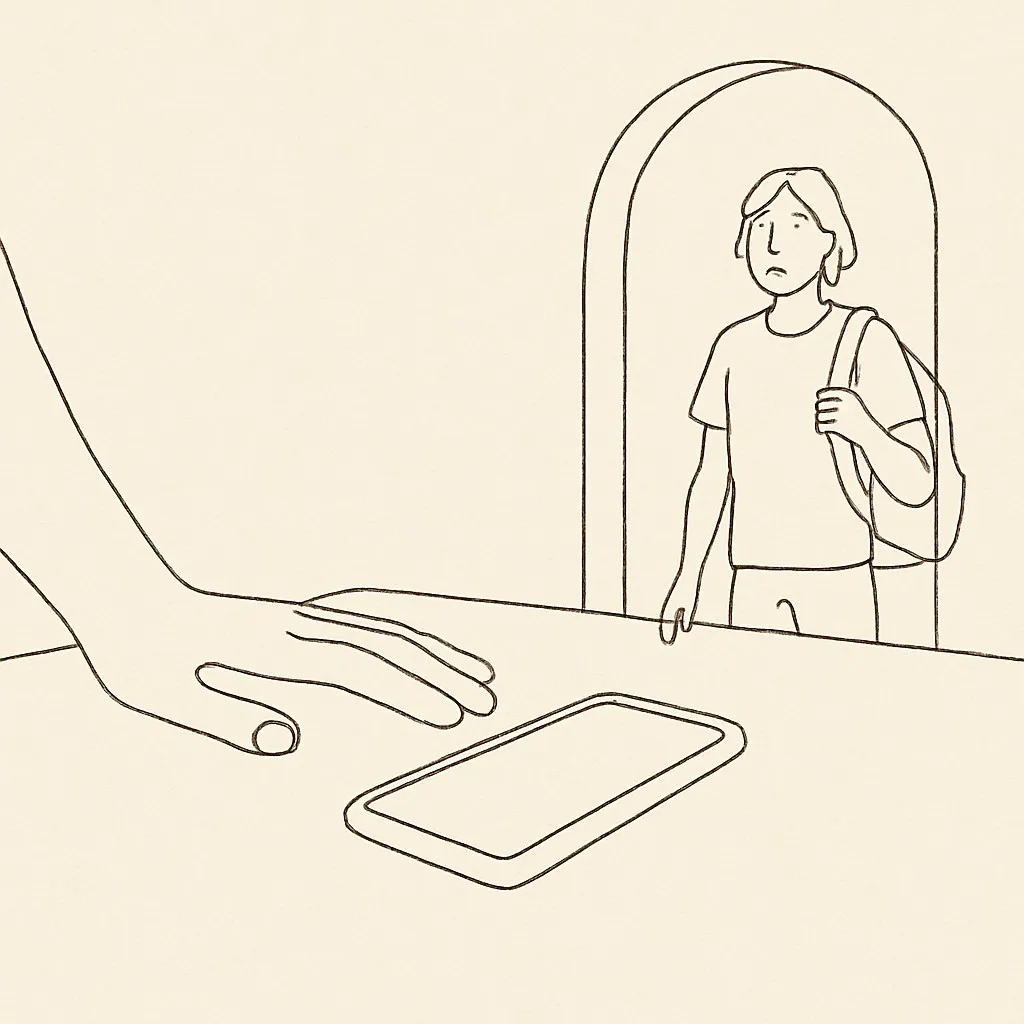
Their phone was open on the counter. You glanced at the text chain with their boyfriend. They walked in. The look on their face is the look. “Why are you reading my texts?”
What we usually say — and why it backfires.
I was just making sure you were safe.
I'm 16. I'm not in danger from my boyfriend texting me good night.
How do I know that without looking?
By trusting me. Which you don't.
- “Just making sure you were safe” is the parent saying surveillance is care. Teens know the difference and resent the relabeling.
- “How do I know without looking” is the parent confessing they prefer surveillance to conversation, which is the actual problem they should be solving.
- “By trusting me. Which you don't.” is the teen naming what you broke. The right move now is not to defend, but to repair.
What works — and why.
You're right. I shouldn't have. I was anxious about something I'd heard and I went the wrong way. I'm sorry.
What did you hear?
That you two have been fighting and I was worried about how he talks to you. Wrong to snoop — right to ask. So I'm asking: how is it actually going?
...it's been hard but it's getting better. He's been working on it.
Okay. I trust you to tell me if it stops getting better. Phone is yours. I won't do that again.
- “You're right. I shouldn't have” is the only sentence that starts the repair. Anything else extends the damage.
- Converting the snoop into a direct question (“how is it actually going?”) gets you the information snooping would never have surfaced in context.
- Saying “phone is yours, I won't do that again” and then ACTUALLY not doing it again is the trust-rebuild over weeks. Words alone won't.
Key phrases to reach for in the moment.
- You're right. I shouldn't have.
- I was anxious about something I'd heard. Wrong to snoop — right to ask.
- How is it actually going?
- Phone is yours. I won't do that again. (And then don't.)
Call or text 988 (Suicide & Crisis Lifeline, 24/7) · Text HOME to 741741 (Crisis Text Line) · Find a child psychiatrist at aacap.org · For immediate danger, call 911.