I.
The scene
What's happening.
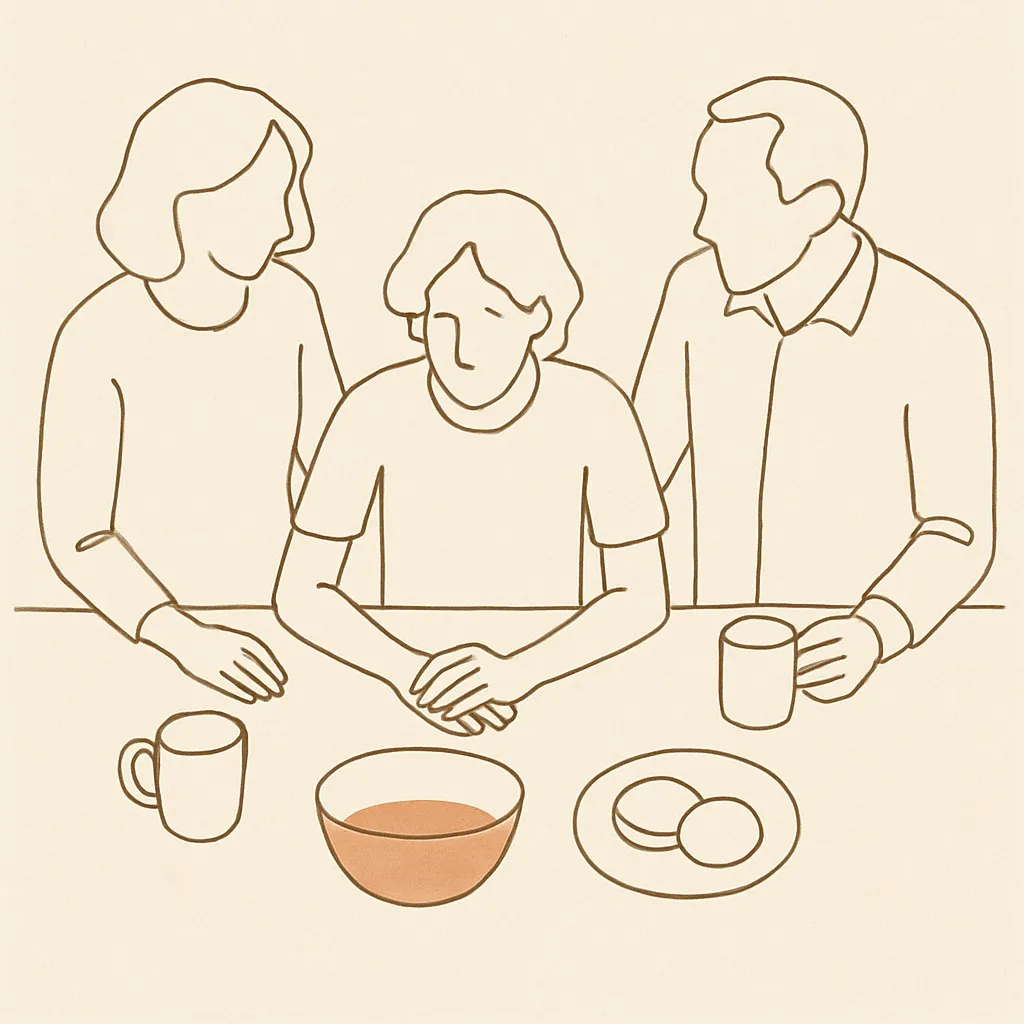
Your 13-year-old: “Mom said I can't go to the concert. Can you ask her again? She'd say yes if it came from you.” You inhale.
II.
The instinctive version
What we usually say — and why it backfires.
Parent
Well, what reason did she give?
Teen
She didn't really give one. Just no.
Parent
Let me talk to her. Sometimes she's just having a hard day.
Teen
(parental unity dies right here; teen learns to triangulate forever)
- Re-litigating mom's decision behind her back trains the teen to always look for the weaker parental link.
- “Sometimes she's having a hard day” undermines your partner to your child — long-term corrosive.
- Once you do this once, every future ask is filtered through which parent is more likely to say yes.
III.
The better version
What works — and why.
Parent
I'm a no, same answer as Mom. We don't run a two-pass system. If Mom and I disagree on something, we'll talk privately and one of us will come back to you with the shared answer. That's not a no with a back door, that's how this family works.
Teen
...okay. Worth a try I guess.
Parent
Always worth a try. Always going to get the same answer.
- Closing the divide-and-conquer loophole in 4 sentences saves you years of triangulation games.
- “If Mom and I disagree, we'll talk privately and come back to you with the shared answer” names the actual rule — and you have to actually do it for the rule to hold.
- The light tone at the end (“always worth a try, always the same answer”) keeps the relationship warm while the rule holds firm.
IV.
Memorize these
Key phrases to reach for in the moment.
- I'm a no, same answer as Mom.
- We don't run a two-pass system.
- If Mom and I disagree, we'll talk privately and one of us will come back to you with the shared answer.
- Always worth a try. Always going to get the same answer.