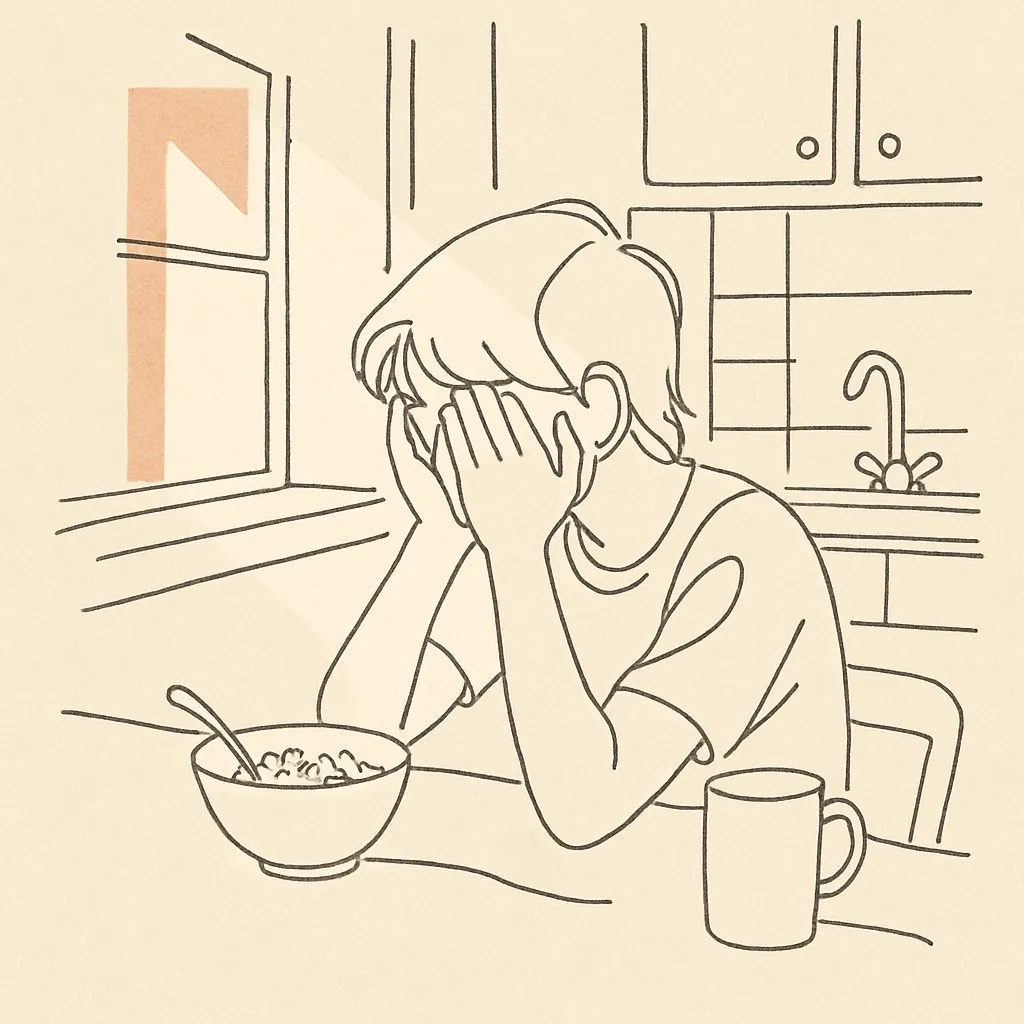
What's happening.
Your 14-year-old, over breakfast: “I keep falling asleep in class. Twice this week. Mr. K called me out yesterday.” You note the pattern.
What we usually say — and why it backfires.
Get off your phone earlier at night.
I AM. I'm in bed by 10:30.
Then you're not actually sleeping. Stop scrolling under the covers.
(parent assumed the cause without asking; the actual issue, whatever it is, doesn't get diagnosed)
- Assuming screens is convenient and often wrong. Lots of falling-asleep-in-class is actually sleep apnea, anxiety, mononucleosis, anemia, or medication.
- “You're not actually sleeping” treats the teen's report as a lie before investigating.
- Treatable medical sleep issues in adolescents get missed for years because parents assume screens.
What works — and why.
Hmm, twice this week is a real pattern. Walk me through your sleep — what time do you actually fall asleep, what time do you wake up, do you wake up during the night, do you snore?
Asleep maybe 11:30. Up at 6:30. Sleep through. Don't think I snore.
Okay, 7 hours — slightly under what 14-year-olds need (8-10) but not catastrophic. So the in-class sleep isn't fully explained by quantity. Let's also rule out other stuff — I want to get you a basic blood panel through the pediatrician (thyroid, iron, vitamin D — all common adolescent fatigue culprits) and ask about whether you might need a sleep study. Could be totally nothing. Worth checking.
- Asking the sleep-diagnostic questions (asleep time, wake time, mid-night wake, snoring) is what doctors do and gets you the data.
- Naming that 7 hours is slightly under target but not enough to explain in-class sleep means you're treating their report as honest.
- Routing to bloodwork + maybe sleep study is the right medical move — common adolescent fatigue has common medical causes that get missed.
Key phrases to reach for in the moment.
- Twice this week is a real pattern.
- Walk me through your sleep — fall-asleep time, wake time, wake during the night, snore?
- [Their numbers] is [under/over target] — but doesn't fully explain [the symptom].
- I want to get a basic blood panel through the pediatrician [thyroid, iron, D] and ask about sleep study.