What's happening.
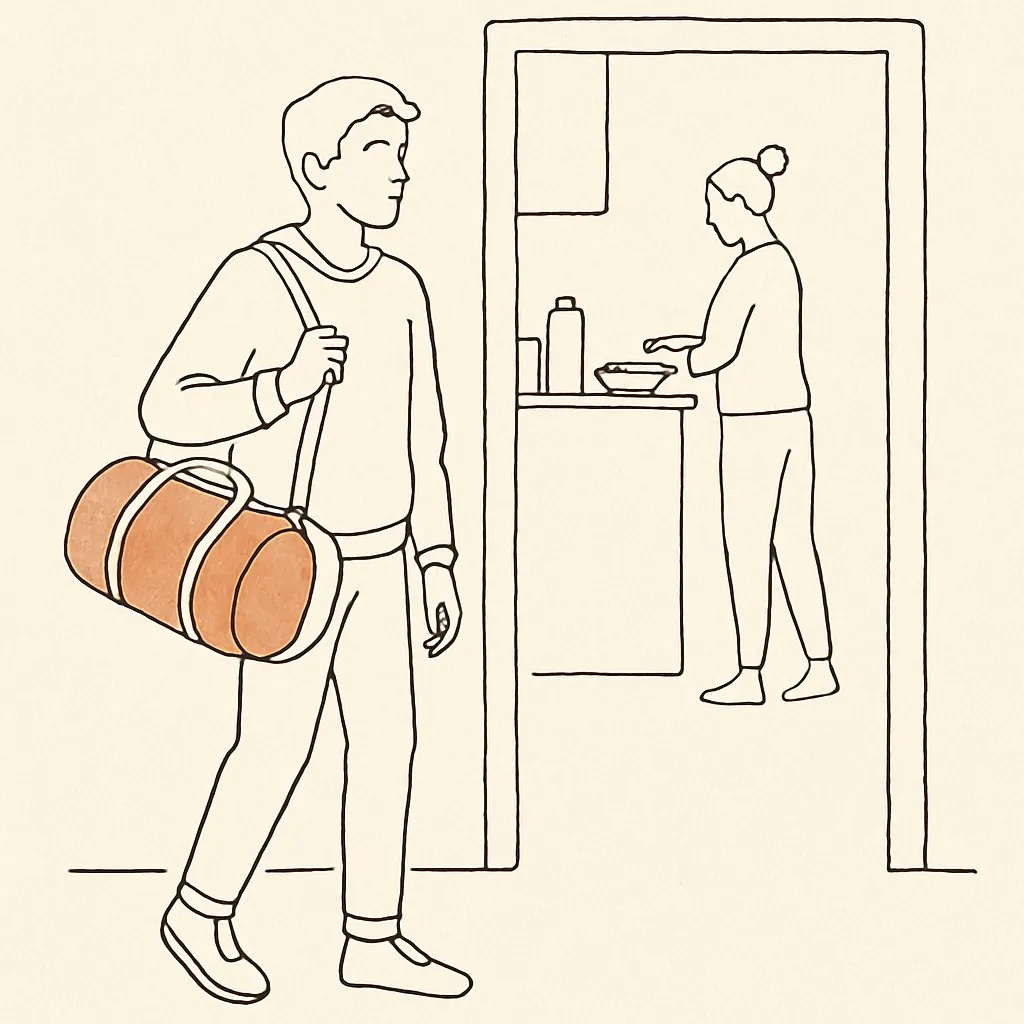
Your 15-year-old, after practice: “I want to quit volleyball. Mid-season. I don't want to play anymore.” You set down what you're holding.
What we usually say — and why it backfires.
You can't quit mid-season. You committed to the team. End of discussion.
I can't keep doing this.
You finish what you start. Period.
(finishes the season hating it, hating you, never plays again)
- “You can't quit” without investigation forecloses the conversation about what's actually going on.
- “You finish what you start. Period” is a cliché that doesn't survive contact with the actual reasons a teen quits — bullying, body issues, abuse, mental health, schedule destruction.
- Forced compliance produces resentment that outlasts the season.
What works — and why.
Okay. That's a big call. Tell me — is it the sport, the coach, the team, your schedule, or something happening on it that I don't know about?
...some of the older girls have been making comments about my body. Coach knows and doesn't do anything. I dread practice.
Okay. That's not 'I don't want to play anymore,' that's an unsafe environment. Quitting is on the table for sure. So is reporting and staying. We don't have to decide which one tonight. What I can promise is: I'm not going to make you go back to practice this week. Let's give your nervous system a few days off while we figure out the right move.
- “Is it the sport, the coach, the team, your schedule, or something happening I don't know about?” surfaces almost every real reason in one question.
- Renaming what they described (“that's an unsafe environment, not quitting”) gives them framework for their own experience.
- Pausing the immediate pressure (“not this week”) lets the actual decision get made with a regulated nervous system.
Key phrases to reach for in the moment.
- Is it the sport, the coach, the team, your schedule, or something happening I don't know about?
- That's not 'I don't want to play anymore,' that's [accurate name for what they described].
- Quitting is on the table. So is reporting and staying. We don't have to decide tonight.
- I'm not going to make you go back this week.