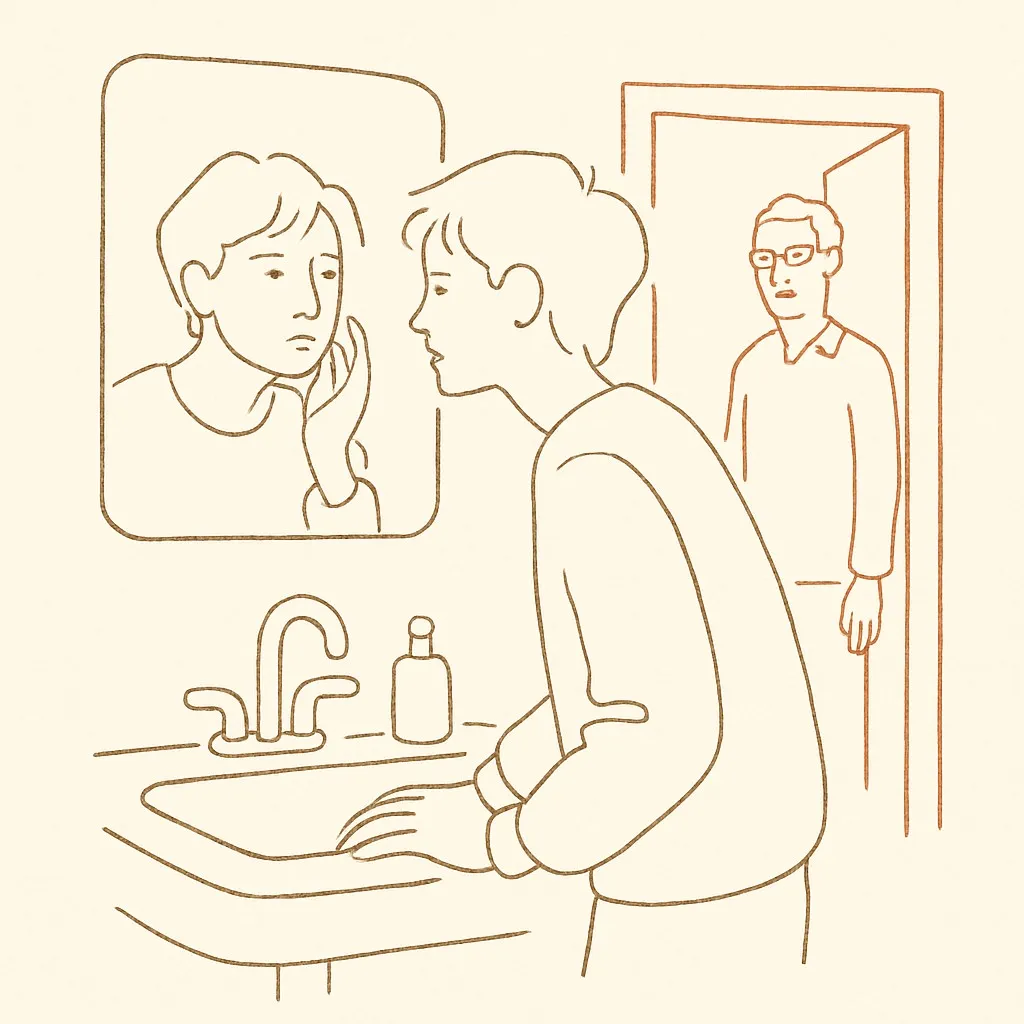
What's happening.
Your 15-year-old: “I want a nose job. For my 16th birthday.” You feel both your gut and the credit card flinch.
What we usually say — and why it backfires.
Absolutely not. You're 15. You're beautiful.
You have to say that. You don't have to live in this face.
This conversation is over. We're not paying for cosmetic surgery on a child.
(starts saving, plans to do it at 18 angrier and with less input from you)
- Compliments register as obligation, exactly like with “I hate my body” — the teen wrote off your “you're beautiful” before you said it.
- “This conversation is over” may produce compliance and guarantees you'll have no influence when the same conversation comes up at 18.
- You skipped the actual question — what's driving this, when did it start, who else is involved.
What works — and why.
Okay. That's a big ask. Walk me through it — when did you start thinking about this, what specifically about your nose, and is anyone else's voice in this?
Maybe a year. Just the side profile. And Lily said something months ago about it that I haven't been able to stop thinking about.
Got it. Two things matter to me here. One: a friend's offhand comment a year ago is still running in your head. That's not a nose issue, that's a brain doing what teen brains do — and it's worth talking to someone about, because changing the nose doesn't usually quiet the voice. Two: faces aren't done growing until 18-ish, and surgeons won't touch most patients younger. I'm not closing the door on this conversation forever — I'm closing it on 16. Let's revisit at 18, with a therapist consult first, and I'll go to the surgical consult with you if it's still what you want.
...okay. The therapist part actually sounds good.
- Asking when / what specifically / whose voice surfaces the actual driver — almost always a specific comment, often years before the ask.
- Distinguishing “changing the nose” from “quieting the voice” is the conversation that needs to happen, and most teens take it seriously when framed this way.
- Deferring without closing (“revisit at 18, with a therapist consult”) keeps you the relevant adult in the room when the decision is actually being made.
Key phrases to reach for in the moment.
- Walk me through it — when did you start thinking about this, what specifically, and is anyone else's voice in this?
- A friend's offhand comment running in your head is a brain issue, not a face issue.
- Changing the [body part] doesn't usually quiet the voice.
- I'm not closing the door on this forever. I'm closing it on [age].
Call or text 988 (Suicide & Crisis Lifeline, 24/7) · Text HOME to 741741 (Crisis Text Line) · Find a child psychiatrist at aacap.org · For immediate danger, call 911.