What's happening.
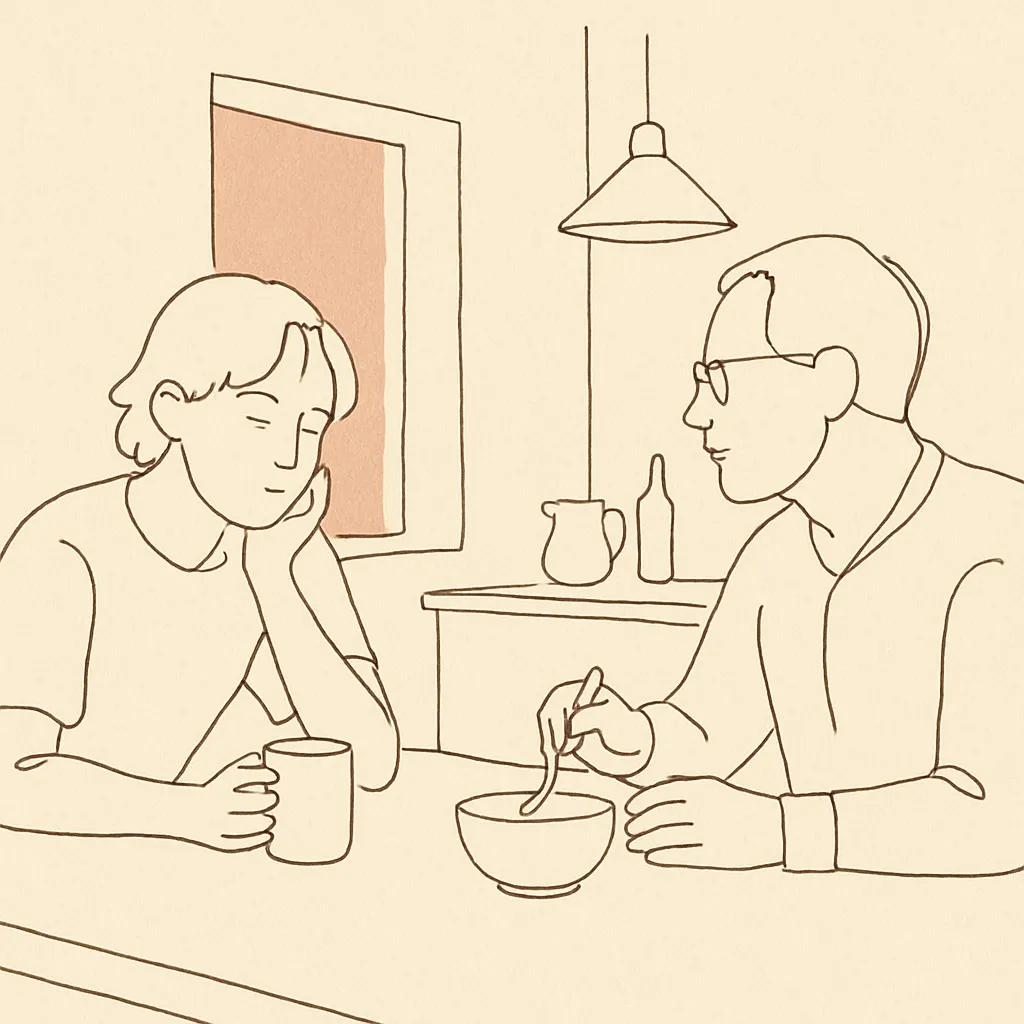
Your 15-year-old, voice tight: “Mom. I told a lie a while back and it's gotten really big and I don't know how to undo it.” You sit down.
What we usually say — and why it backfires.
What did you lie about?? Tell me right now.
I'm trying to —
I knew you were hiding something. I KNEW it.
(retreats; the parent's victory lap on detection kills the confession)
- Demanding details first prioritizes your curiosity over the teen's courage to confess.
- “I knew you were hiding something” is the parent gloating; the teen now wishes they hadn't said anything.
- Once the teen feels they're being prosecuted instead of helped, the rest of the truth stays hidden.
What works — and why.
Okay. Thank you for telling me even this much. Walk me through it slowly — what was the original lie, who it's to, and how big has it gotten?
I told Lily I had a boyfriend at another school. There's no boyfriend. She tells everyone now. People are asking to see pictures. I'm panicking.
Got it. Okay — first, this isn't a moral catastrophe, it's a social tangle and tangles can be untangled. Second, the only way out is forward — telling Lily the truth, accepting the brief social cost, moving on. The lie is going to keep growing until you stop feeding it. I can help you script the conversation with Lily if you want, or you can do it your way. Either is fine. The lying is unsustainable; the truth is uncomfortable for a week. We pick the week.
- “Thank you for telling me even this much” rewards the partial confession, which usually unlocks the full one.
- Reframing from 'moral catastrophe' to 'social tangle' takes the shame down and the actionability up.
- “The lying is unsustainable; the truth is uncomfortable for a week. We pick the week.” is the framing that makes the right move feel finite and survivable.
Key phrases to reach for in the moment.
- Thank you for telling me even this much.
- Walk me through it slowly — original lie, who it's to, how big has it gotten?
- Not a moral catastrophe — a social tangle. Tangles can be untangled.
- The lying is unsustainable; the truth is uncomfortable for a week. We pick the week.