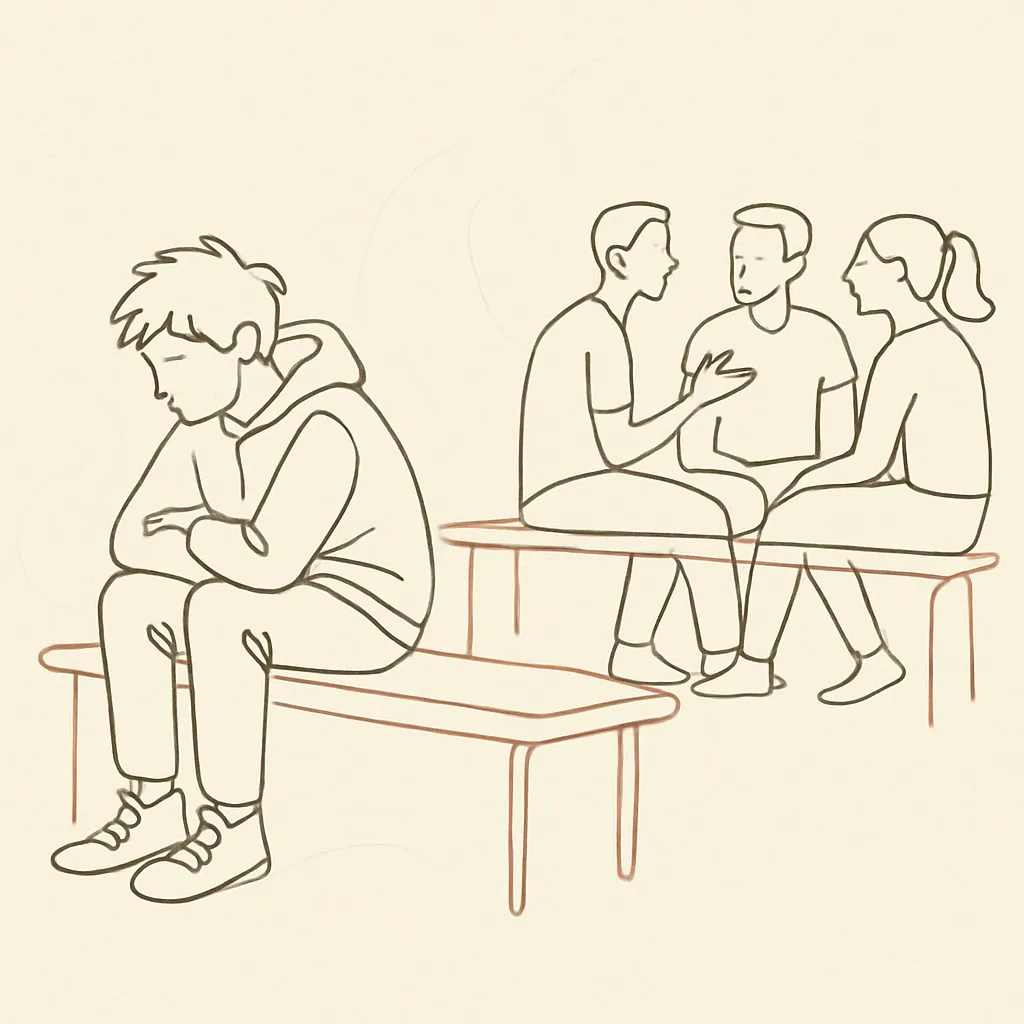
What's happening.
Your 12-year-old, on the drive home: “Everyone has a friend group except me. I sit with people but I'm not really part of anything.” The honesty stings.
What we usually say — and why it backfires.
Why don't you invite some kids over this weekend? I'll order pizza.
That's not how it works at this age.
Well then what DO you want to do about it?
I don't know. Forget it.
- “Invite some kids over” is the parent reaching for the only tool they had at 12 — which doesn't work the same way in middle school now.
- “What DO you want to do” puts the burden on the teen to solve the problem they just told you they have. Tactically wrong.
- “Forget it” is the kid retreating because the conversation didn't go anywhere helpful.
What works — and why.
Yeah, that's hard. Is there anyone you actually wish you were closer with — like, if you could be in any group, whose?
...there's this girl Avery who's really nice to me. I don't think she has a tight group either, actually.
Interesting. Honestly the group thing is overrated — most adult friendships are one-on-one. What if instead of trying to break into a group, the move is one really solid friendship with Avery? Coffee with her, project partner, like that?
I could ask her to study together.
Perfect. One real person beats five people you sit with.
- “Anyone you wish you were closer with” redirects from the abstract (“friend group”) to the concrete (a specific person) — which is actionable.
- Reframing the goal (one good friendship > group membership) is more accurate to adult social reality and instantly more achievable.
- “One real person beats five you sit with” is a sentence the teen can carry. They'll remember it for years.
Key phrases to reach for in the moment.
- Yeah, that's hard.
- Is there anyone you actually wish you were closer with?
- What if the move is one really solid friendship, not group membership?
- One real person beats five you sit with.