
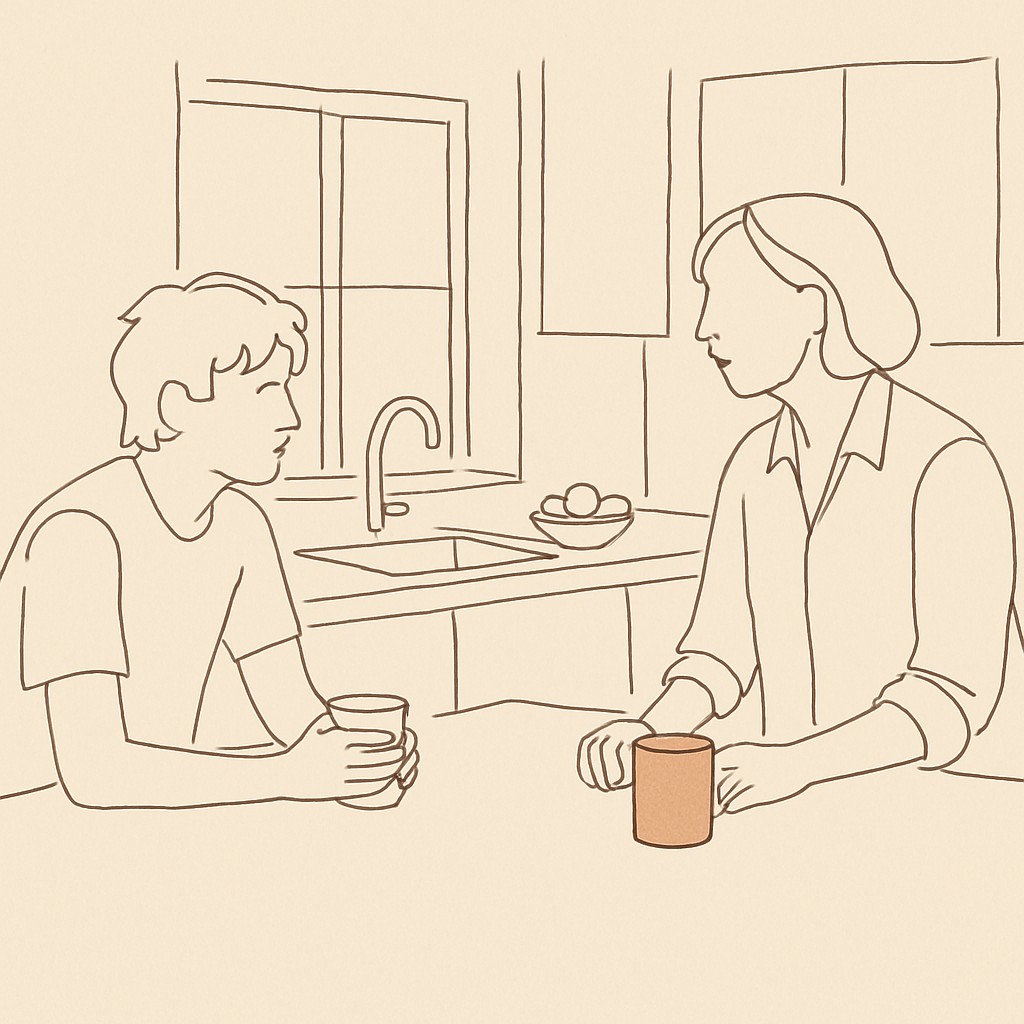
What's happening.
Your 14-year-old: “Dad just told me I can go to the concert if I pay for the ticket myself. You said no last week. Which is it?” You inhale.
What we usually say — and why it backfires.
I said no, that's the answer.
But Dad said yes.
Dad doesn't get the final call on this.
(Dad and Mom now both think they made the call; teen has zero idea what's allowed)
- “I said no, that's the answer” unilaterally overrides Dad in front of the teen, which dad will resent and the teen will exploit.
- “Dad doesn't get the final call” names a hierarchy that the marriage probably hasn't agreed to.
- The teen learns that getting the right answer depends on which parent they ask last.
What works — and why.
Pause. Dad and I clearly didn't talk before answering. That's our miss, not yours. Don't go anywhere — I'm going to call Dad right now, we figure out the joint answer, ONE of us comes back to you with it. The answer might be yes, might be no, might be a modified yes. But it's going to be a single answer.
...okay.
Also, this isn't a punishment for asking. Going to two parents when they live in the same house is a 100% reasonable teen move. We just have to actually communicate as parents.
- Owning the miss (“that's our miss, not yours”) puts the responsibility back on the parents where it belongs.
- “ONE of us comes back to you with it” is the rule that, if you keep it, prevents this exact problem in the future.
- “Going to two parents when they live in the same house is reasonable” takes the moralizing off the teen.
Key phrases to reach for in the moment.
- Pause. Dad and I clearly didn't talk before answering. That's our miss, not yours.
- I'm going to call Dad right now, we figure out the joint answer, ONE of us comes back to you with it.
- Going to two parents when they live in the same house is a reasonable teen move. We just have to actually communicate as parents.