What's happening.
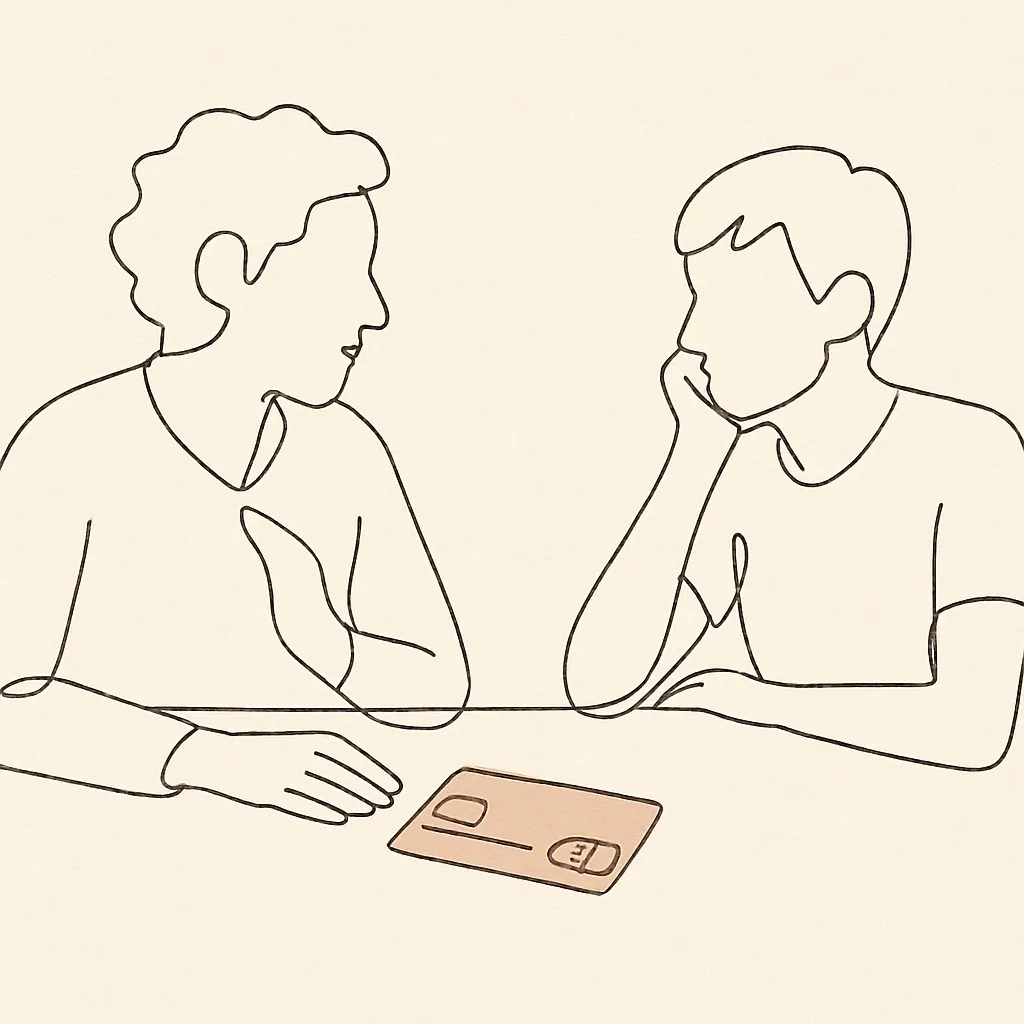
Your 13-year-old: “Can I have a debit card? Lily has one and we could split things at Target.” You realize you've never thought about this.
What we usually say — and why it backfires.
13 is too young for a debit card. You'll spend it all in a week.
That's literally the only way to learn.
You can learn with cash.
Lily uses Apple Pay everywhere. Cash isn't a thing.
- “You'll spend it all in a week” may be true and is the lesson. Predicting it as failure precludes the learning.
- “You can learn with cash” reflects a 2005 economy. Teen money is digital now whether parents prefer it or not.
- The teen's point is correct. You're refusing a tool they need to learn the actual money-handling skills of their lifetime.
What works — and why.
Sure, that's reasonable. Let me think about how to set it up. A teen-account product like Greenlight, Chase First, or just a joint account with a debit card — each has different features. I'd want one where I can see transactions, set a daily spending cap, and you have your own allowance flow into it.
I don't care which one. Just one that works at Target.
They all do. Here's the framing — the daily cap is so you can't accidentally drain it on one impulse, the visibility is so I can see if anything weird happens (not to police $5 snacks), and we agree that anything over $30 you give me a heads-up before, not for permission, for awareness.
Deal.
- Saying yes when the ask is reasonable AND age-appropriate is the right developmental move. First debit cards at 13-14 are a strong financial-literacy intervention.
- Naming WHY each rule exists (cap = impulse, visibility = safety not policing, heads-up not permission = trust) gives the teen the model of how household money rules work.
- “Heads-up before, not for permission, for awareness” is the language to memorize — applies to many household-trust questions beyond money.
Key phrases to reach for in the moment.
- Sure, that's reasonable.
- [Specific product: Greenlight / Chase First / joint account with debit].
- The [rule] is for [reason], not to police you.
- Anything over $X, you give me a heads-up before — not for permission, for awareness.