
I.
The scene
What's happening.
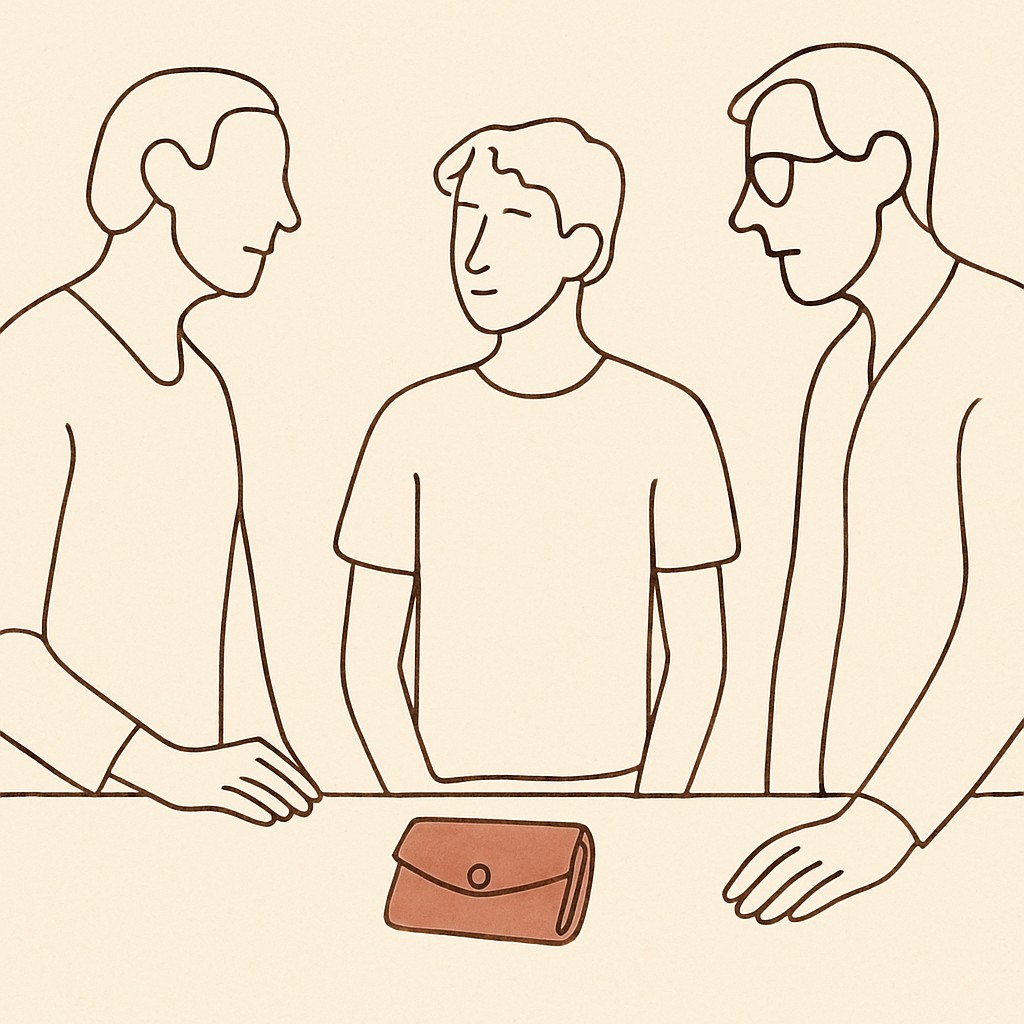
Your 14-year-old, defensive but talking: “Mom — did you go into my wallet? My $40 from babysitting is gone.” You think about it. You did, last week, for gas.
II.
The instinctive version
What we usually say — and why it backfires.
Parent
What? No. Your sister probably.
Teen
I asked her. She didn't.
Parent
Well I didn't either. You probably spent it and forgot.
Teen
(learns: parents lie when it's small; the family currency of trust just dropped)
- Blaming a sibling is the small lie that opens the door to bigger ones. The teen will compare notes later and you'll be caught.
- “You probably spent it and forgot” is gaslighting at the household scale, and teens detect it perfectly.
- The trust cost of this lie is FAR larger than the trust cost of borrowing $40 without asking. Don't trade.
III.
The better version
What works — and why.
Parent
Yeah. I did. I borrowed it for gas last week and forgot to tell you. I'm sorry — that wasn't mine to take without asking. Here's $40, plus $5 because that was rude of me. Going forward, the rule applies both ways: if any of us borrows from another's wallet, we say so immediately. Deal?
Teen
...okay. Yeah. Deal.
- “Yeah. I did.” immediately preserves the trust currency that's at stake — much more valuable than the $40.
- Adding $5 for the inconvenience is the small gesture that makes the apology real to the teen, not just words.
- Stating the rule applies both ways teaches household norms more effectively than any one-direction lecture could.
IV.
Memorize these
Key phrases to reach for in the moment.
- Yeah. I did. I'm sorry — that wasn't mine to take without asking.
- Here's [the amount] plus [a little extra] because that was rude of me.
- Going forward, the rule applies both ways: if any of us borrows from another's wallet, we say so immediately.
- Deal?