
I.
The scene
What's happening.
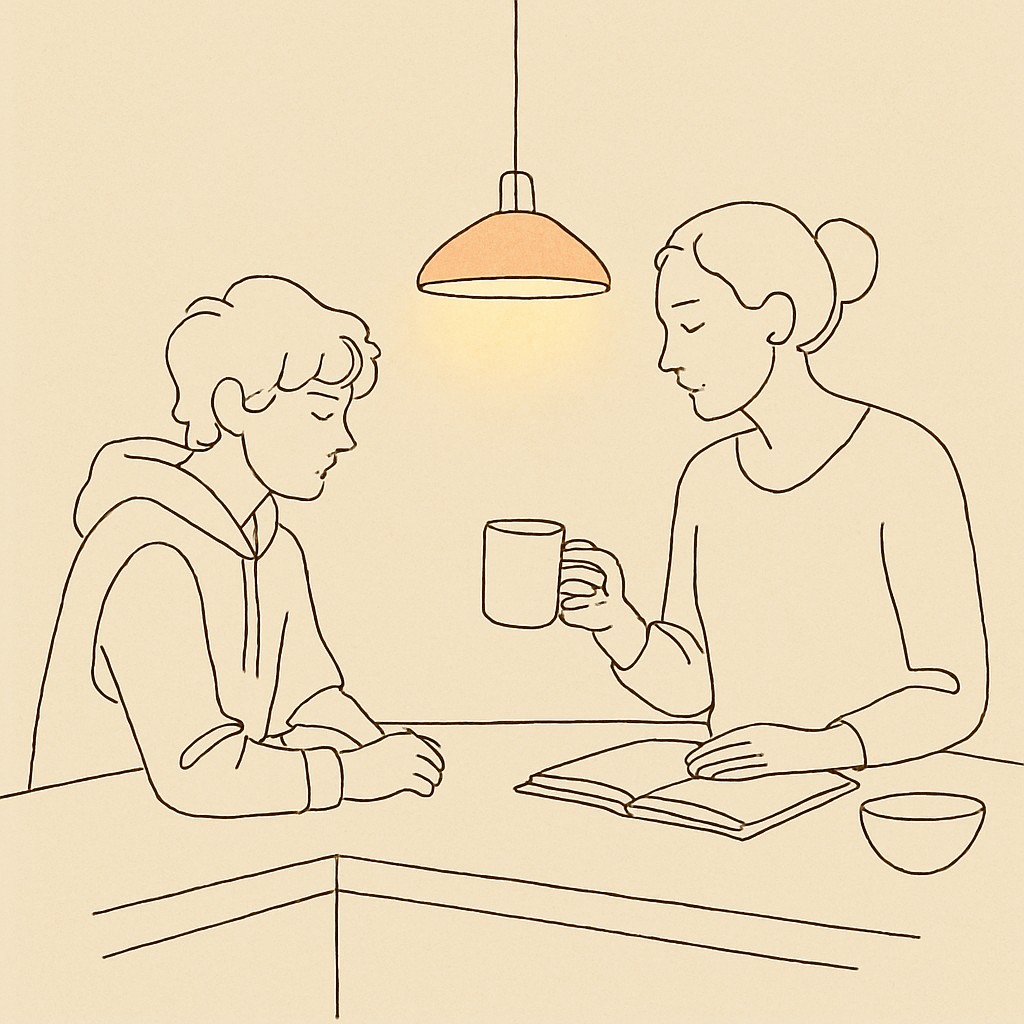
Your 13-year-old, 9:50pm: “Why do I have to go to bed at 10? Everyone else's bedtime is midnight.” You note this is the third time this week.
II.
The instinctive version
What we usually say — and why it backfires.
Parent
Because I said so. Bed at 10.
Teen
That's not an answer.
Parent
It's the answer you get.
Teen
(complies, resents, stays on phone under covers until 12)
- “Because I said so” at 13 doesn't work — they have their own information and the answer registers as parental laziness.
- “It's the answer you get” closes the conversation in a way that produces the workaround (phone under covers).
- Long-term: rules without reasons generate exactly the rule-following you observe (none).
III.
The better version
What works — and why.
Parent
Real answer — adolescent sleep research is unambiguous: 13-year-olds need 9-10 hours, school starts at 7:30, the math doesn't math at midnight. The bed-at-10 isn't arbitrary, it's me caring about your brain. AND — I get that you're not always actually sleepy at 10. Phone in the kitchen at 10, but you can read or listen to music or be in bed quietly until you fall asleep. The 10pm rule is about sleep timing, not lights-out-eyes-shut.
Teen
...okay. That's actually fair.
- Citing the actual research (9-10 hours, school start time) makes the rule concrete and citable.
- Distinguishing 'bedtime' from 'lights-out' respects that they're not always sleepy at the rule time — and gives them legitimate space to wind down.
- “Me caring about your brain” reframes the rule as care rather than authority.
IV.
Memorize these
Key phrases to reach for in the moment.
- Real answer — adolescent sleep research is unambiguous.
- The [rule] isn't arbitrary, it's me caring about your brain.
- Phone in the kitchen at [time], but you can read / listen / be in bed quietly.
- The rule is about [sleep timing], not [lights-out-eyes-shut].