What's happening.
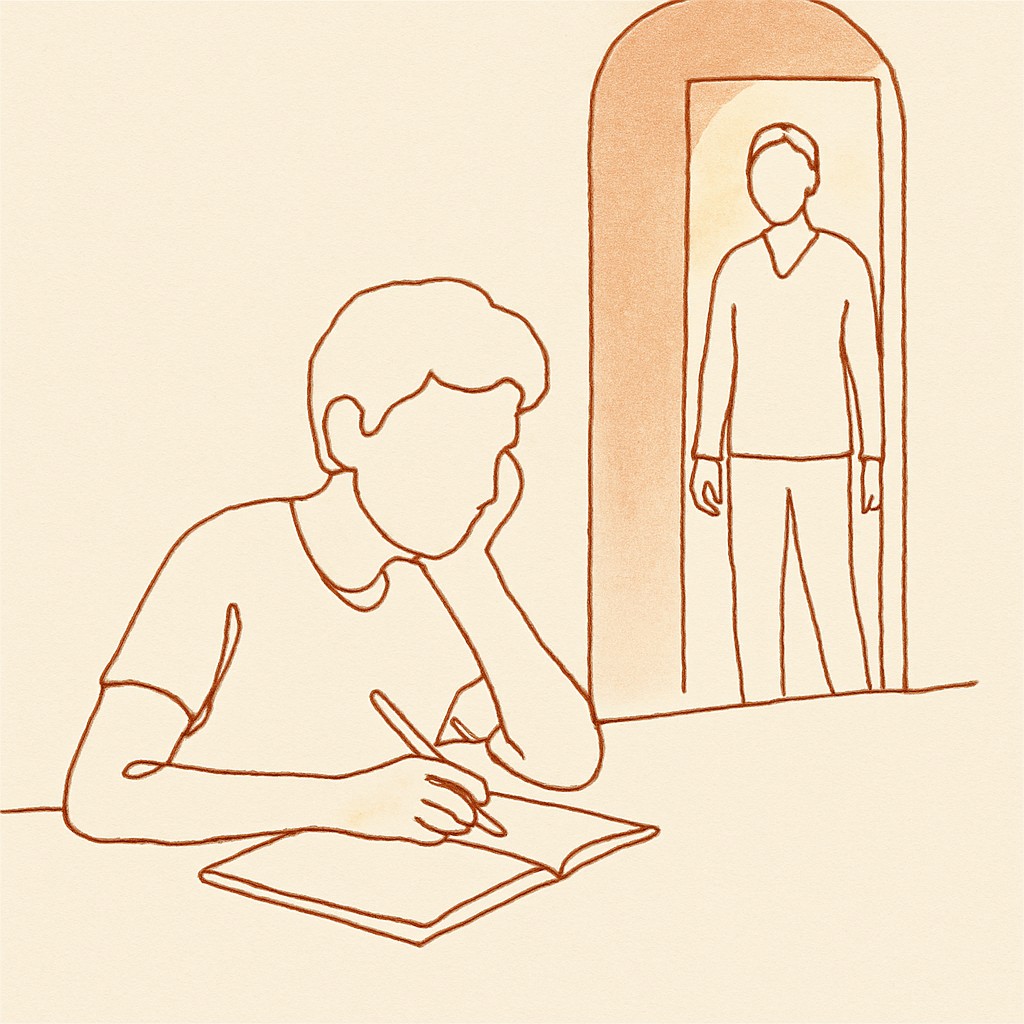
Your 14-year-old, on the couch: “I want to write a book. Like a novel. I have an idea.” You set down the magazine.
What we usually say — and why it backfires.
Oh that's so cute! I'm sure you'll write a great book!
I'm serious.
I know! Go for it!
(parent's surface encouragement registers as not-taking-it-seriously; they don't bring it back up)
- “That's so cute!” is the cheapest form of support — surface enthusiasm without engagement.
- “Go for it!” without practical conversation is empty.
- Long-term: teens whose creative declarations got patted-on-the-head support tend to abandon the projects within weeks.
What works — and why.
Tell me the idea. Like, two-minute pitch — what's it about, who's the main character, what's the conflict.
(spells out idea)
Cool, that's a real premise. Couple of practical things — most teen novel attempts die at chapter 3 because of plot. So: write the synopsis first, even just bullet points, before you write chapter 1 — then you know where you're going. NaNoWriMo in November is a great structure if you want a deadline. And — would you want anyone to read drafts as you go, or is it private until done?
Private until done. But I might want you to read it then.
I would be honored.
- Asking for the two-minute pitch engages with the actual project.
- “Most teen novel attempts die at chapter 3 because of plot” is real creative wisdom — synopsis first is the move.
- “I would be honored” is the right registration of how big a deal it is to be trusted with a draft.
Key phrases to reach for in the moment.
- Tell me the idea. Two-minute pitch — what's it about, who's the main character, what's the conflict.
- That's a real premise.
- [Specific creative wisdom: synopsis first, NaNoWriMo in November, etc.]
- Would you want anyone to read drafts as you go, or private until done? — I would be honored.