
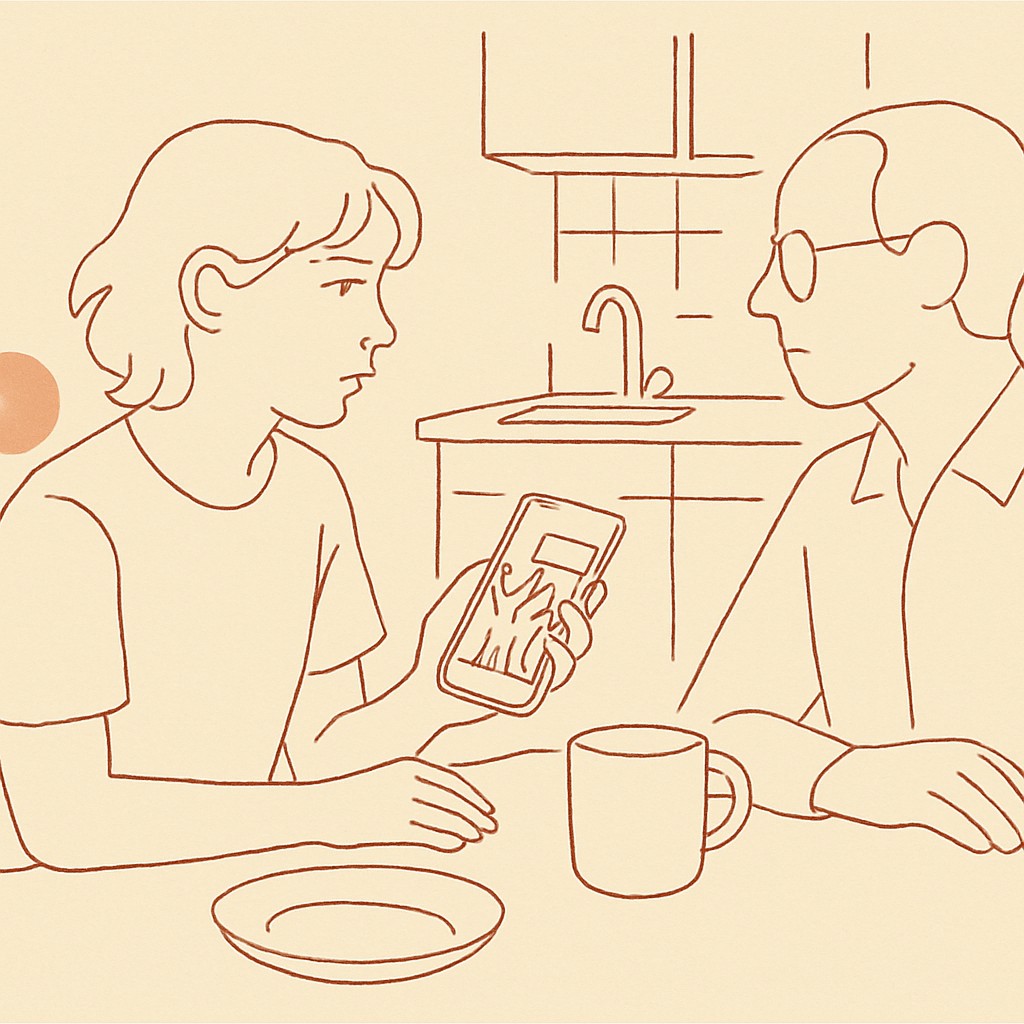
What's happening.
Your 16-year-old: “There's a protest downtown Saturday. About [cause]. I want to go.”
What we usually say — and why it backfires.
Absolutely not. Protests get out of hand.
Most of them are peaceful.
And then one isn't. The answer is no.
(goes to the protest without telling you, you find out from a friend's parent or Instagram)
- “Protests get out of hand” is sometimes true and is the parent prioritizing fear over civic engagement.
- Flat no doesn't prevent the attendance; it just makes the attendance secret AND unprepared.
- Long-term: refusing to engage with the civic ask produces an 18-year-old whose first protest is one you don't know they're going to.
What works — and why.
Okay. Tell me about it — what's the cause, who's organizing, where is it, who are you going with, and what's the plan if it gets tense or police show up.
[Cause]. Organized by [legit org]. Federal building plaza. Going with Maya and Lily. Honestly I haven't thought about police.
Okay. The going part is fine — that's civic engagement and I support it. The 'haven't thought about police' part is the homework before Saturday. Things to know: stay at the edge of any crowd, identify exits, agree with Maya and Lily on a rendezvous point in case you get separated, don't put yourself between police and protesters even if it seems peaceful, leave the moment dispersal orders are given. You don't have to be an activist veteran to be safe; you just have to think about it before, not during. Want to read one of the ACLU 'know your rights at protests' guides together tonight?
- Asking the safety-prep questions (where, who, what if police) honors the political ask while inserting the parental concern.
- Naming specific tactical advice (edge of crowd, exits, rendezvous, leave on dispersal) is the actual safety information.
- “You don't have to be an activist veteran to be safe; you just have to think about it before, not during” is the framing that respects them as civic actors.
Key phrases to reach for in the moment.
- Tell me about it — cause, organizers, where, who you're with, plan if it gets tense.
- The going part is fine — that's civic engagement and I support it.
- [Specific safety: edge of crowd, exits, rendezvous, leave on dispersal.]
- You don't have to be an activist veteran to be safe; you just have to think about it before, not during.