
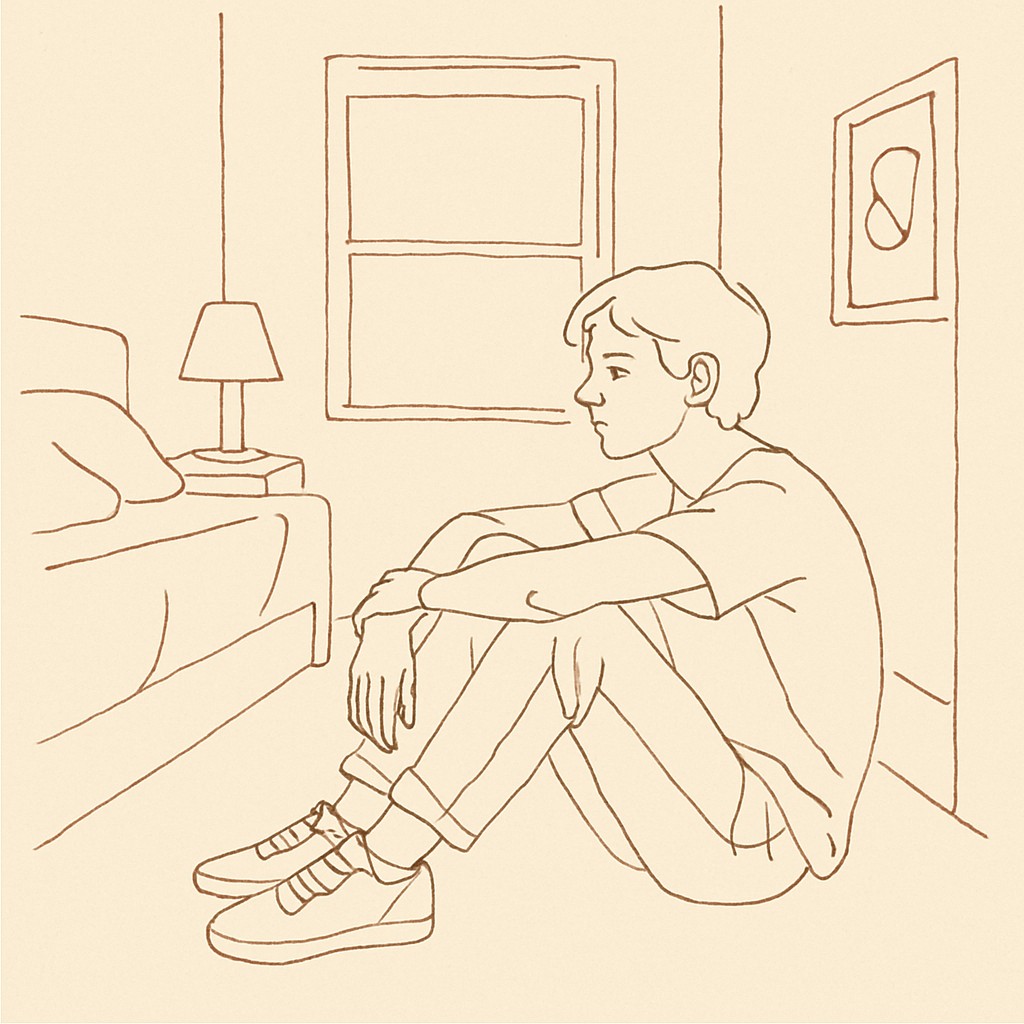
What's happening.
Your 15-year-old, voice flat: “I just feel… nothing. Like, not sad. Just nothing.” You set down your phone.
What we usually say — and why it backfires.
Maybe you just need a good workout. Get the blood flowing.
That's not what this is.
Have you tried meditation? Or going outside?
(stops trying to describe the feeling, lets it sit untreated)
- Solving it with a workout or meditation in the first 30 seconds treats numbness as a lifestyle issue. It often isn't.
- Suggestion-spamming closes the conversation — they wanted to be heard, not problem-solved.
- Long-term: clinical depression and dissociation often present as “numb” rather than “sad” in adolescents. Missing this signal lets it deepen.
What works — and why.
Okay. That's a hard feeling to even describe — I'm glad you said it. How long has it been going on? And is there anything that DOES make you feel something, even briefly?
Like a few weeks I guess. Music sometimes — for a song or two. Then it goes back.
That's important information. The numb feeling — flat, hard to care about things, things that used to matter feeling less real — is one of the ways depression shows up, especially in teens. It often gets missed because it doesn't look like sadness. I'd like to get you in to see someone this week. Not because you're broken, because what you described has a name and there's actual real help for it.
Yeah. Okay.
- “That's a hard feeling to even describe — I'm glad you said it” validates the difficulty of putting language to dissociation.
- Asking what DOES still produce feeling (anhedonia inverse) is a clinically useful question that also signals you're taking it seriously.
- Naming that numbness IS a depression symptom (not just sadness) gives the teen a framework that explains their experience and makes treatment feel rational.
Key phrases to reach for in the moment.
- That's a hard feeling to even describe — I'm glad you said it.
- How long has it been? Is there anything that DOES make you feel something?
- The numb feeling is one of the ways depression shows up, especially in teens.
- I'd like to get you in to see someone this week — not because you're broken.
Adolescent depression frequently presents as anhedonia / numbness rather than overt sadness. Pediatrician or adolescent psychiatrist within the week. 988 Suicide & Crisis Lifeline. The combination of numbness + sleep changes + lost interest is the classic depression triad — when it appears together, urgency increases. SSRIs and CBT both have strong adolescent evidence; many teens respond well to either.