
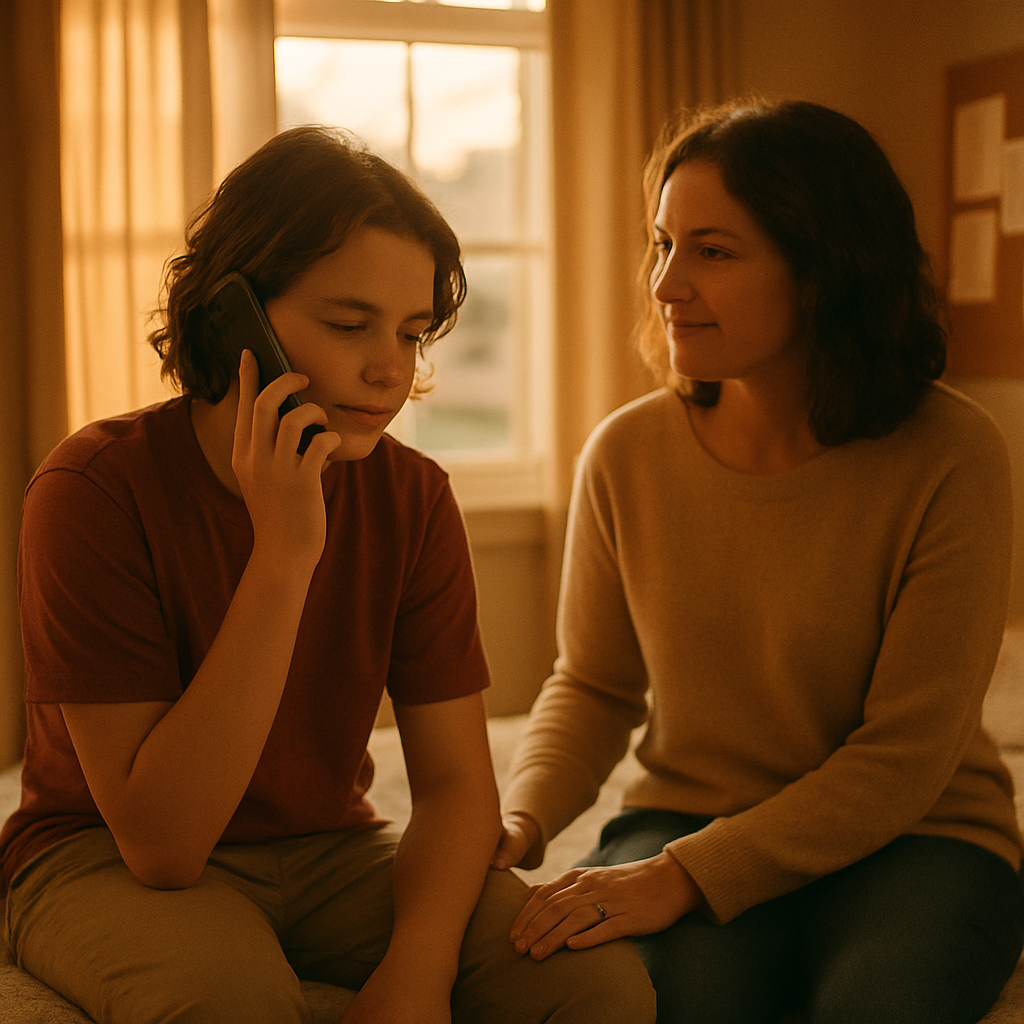
A single free call or text reaches a trained counselor — and the data shows most callers leave less suicidal, not more.
The situation, the move, the outcome.
When the U.S. switched to the easy-to-remember 988 Suicide & Crisis Lifeline in July 2022, it didn't just rebrand a hotline — it scaled one up. In the first year, 988 handled about 5 million contacts, and answer rates jumped (calls from 70% to 93%, texts and chats above 98%). Most contacts are de-escalated by a trained counselor without needing any in-person response, and callers consistently report feeling less suicidal and more hopeful afterward. A study estimated that suicide deaths among 15-to-23-year-olds ran about 11% below projections in the line's first two-and-a-half years — roughly 4,400 fewer young lives lost than expected.
Why it matters beyond one family.
Crisis lines work because a calm, trained voice in the worst moment buys time and routes people to help. Making the number short and memorable measurably increased how many people actually reached that voice.
How to apply it.
- Put 988 in your teen's phone and your own — and say out loud that calling is a sign of strength.
- Tell your teen they can text, not just call, if talking feels impossible.
- Use calm moments to normalize reaching out, so it's familiar before any crisis.
Concrete next steps.
- Call or text 988 (en español too) — free, confidential, 24/7.
- Text HOME to 741741 for the Crisis Text Line as an alternative.
- For immediate danger, call 911; for ongoing care, ask your pediatrician for a referral.
Read it for yourself.
- ScienceAlert — the 988 hotline is saving thousands of lives, study suggests sciencealert.com ↗
- AFSP — about the 988 Suicide & Crisis Lifeline afsp.org ↗
- PMC — 988 in the US: status of implementation evidence pmc.ncbi.nlm.nih.gov ↗
Call or text 988 (Suicide & Crisis Lifeline, 24/7) · Text HOME to 741741 (Crisis Text Line) · Find a child psychiatrist at aacap.org · For immediate danger, call 911.