
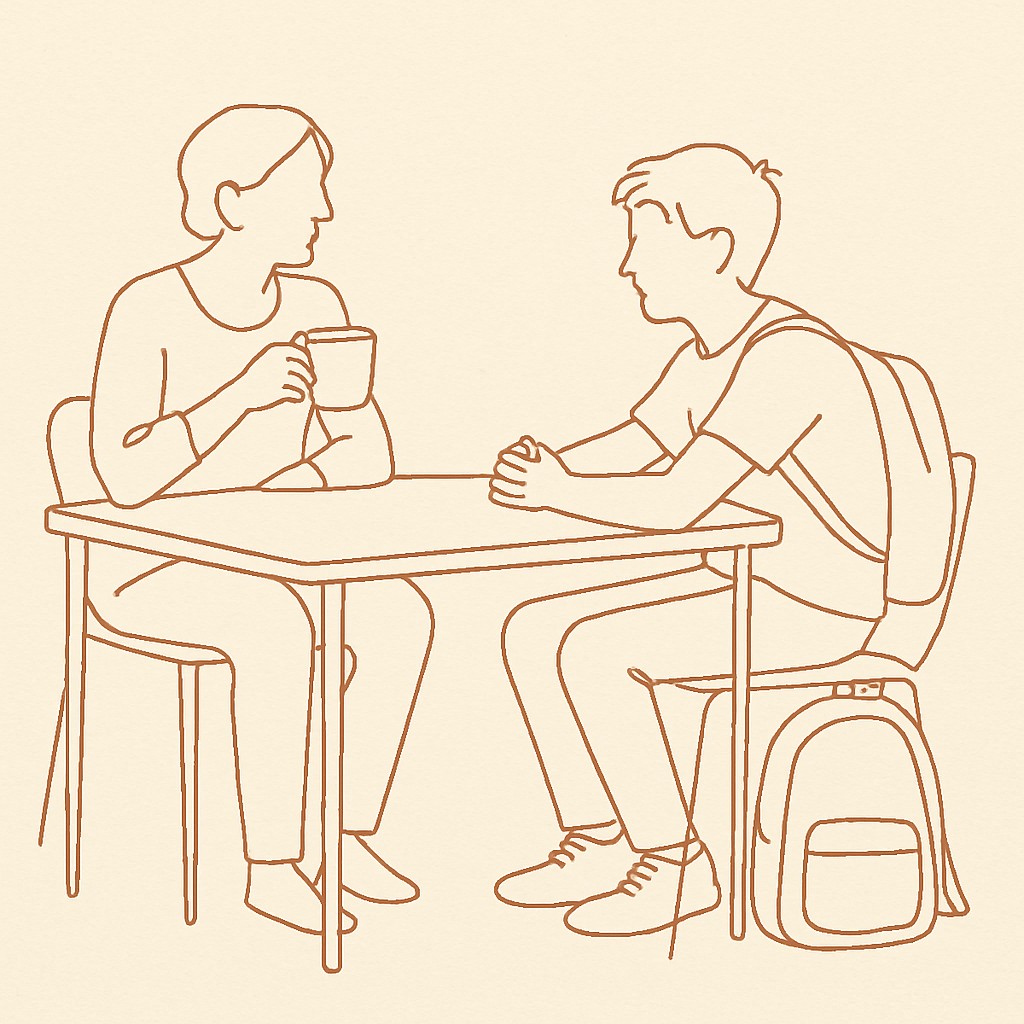
What's happening.
Your 12-year-old, mid-afterschool-snack: “We had a lockdown drill today. I had to crouch in the back of the classroom for 20 minutes. Maddy started crying.” You stop chewing.
What we usually say — and why it backfires.
Well, you know it's just a drill, right? Nothing actually happened.
Yeah, I know. Maddy didn't know.
It's good that the school practices. It's for your safety.
(absorbs that the practiced-for thing is not worth discussing; carries the dread privately)
- “It's good they practice” is the standard adult deflection that misses what the teen actually said. They didn't ask if drills are good — they told you what it was like.
- Skipping past the friend's crying skips past the EMOTIONAL data they offered.
- Long-term: this generation will live with an undercurrent of dread about school violence. Pretending the drills are no-big-deal teaches them not to talk about it.
What works — and why.
Yeah. That's actually a lot to sit with at 12. What was it like in the room, and how was Maddy after?
Quiet. People were trying not to giggle but it was tense. Maddy was shaking even when it was over. I gave her a hug.
I'm glad you did that for her. Honest answer — these drills are awful, the situation that makes them necessary is awful, and you're allowed to have feelings about both. I don't have a fix for the bigger problem. I have a hug for you and I want you to know that the dread you carry around this is not stupid or dramatic. It's accurate. Anything I can do?
...just like this. Talking. Thanks.
- “That's actually a lot to sit with at 12” honors the gravity of an experience the school is implicitly training them to normalize.
- Asking about the friend (Maddy) honors the social information they brought you, and validates the empathy they showed.
- “I don't have a fix for the bigger problem. I have a hug” is the honest adult position — and the one that lets the teen feel seen instead of managed.
Key phrases to reach for in the moment.
- That's actually a lot to sit with at [age].
- What was it like in the room, and how was [friend] after?
- These drills are awful, the situation that makes them necessary is awful — you're allowed to have feelings about both.
- I don't have a fix for the bigger problem. I have a hug for you.