
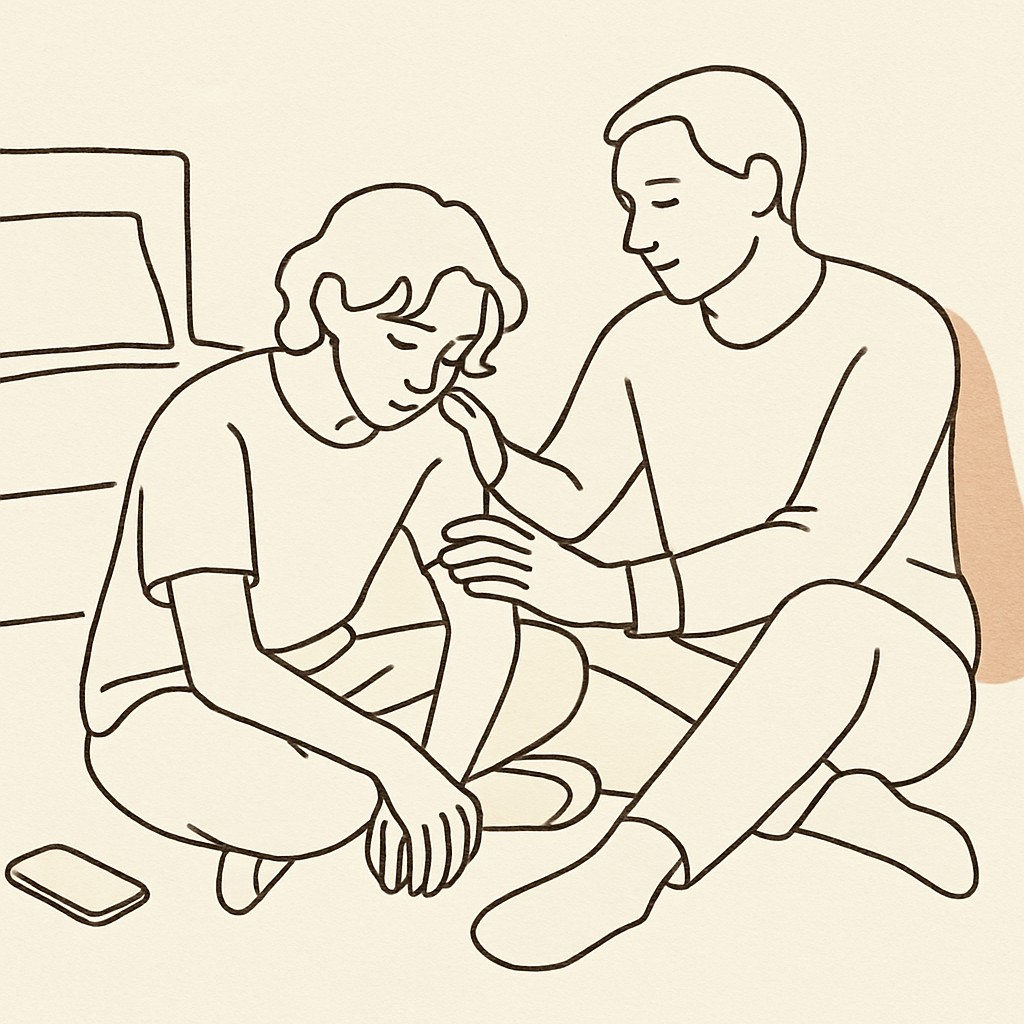
What's happening.
Your 13-year-old, after dinner, voice small: “Mom. I saw something on Instagram I can't unsee. It was bad.” You sit down.
What we usually say — and why it backfires.
What was it? Show me.
I don't want to talk about it.
If you brought it up you have to tell me.
(retreats; the image stays alone with them)
- “Show me” risks the teen re-exposing themselves to the image to satisfy your need to see.
- “If you brought it up you have to tell me” treats the disclosure as a contract instead of a request for support.
- The lesson: bringing you the 'I saw something bad' opener gets you grilled, so they handle the next one alone.
What works — and why.
Okay. I'm sorry that happened. You don't have to show me or describe it. Can I just ask — is it more 'really gross/scary' or is it 'really violent/disturbing'? Either is okay, I'm just trying to know how to be helpful.
...disturbing. Violent.
Got it. That kind of image sticks for a few days, sometimes a week — your brain replays it because it doesn't know how to file it. Couple of things that actually help: don't try to suppress it (that makes it stickier), talk about it briefly (you just did, with me, good), get some screen time AWAY from where you saw it, and do something physical (walk, anything) within the next hour to discharge the residue. If it's still showing up vividly a week from now, we talk to someone.
Okay. Thanks. That helps.
- “You don't have to show me or describe it” protects them from re-exposure and respects the disclosure.
- The category question (gross/scary vs violent/disturbing) helps without forcing specifics.
- Naming the science of intrusive images (brain replays because it can't file them) gives the teen a framework, plus concrete actions, plus a clear escalation criterion.
Key phrases to reach for in the moment.
- You don't have to show me or describe it.
- Is it more 'really gross/scary' or 'really violent/disturbing'?
- Your brain replays it because it doesn't know how to file it.
- Don't suppress, talk briefly, change screens, do something physical within the next hour.